Modern doctor-patient relationships today are built around illness rather than health, and it shows in how care is provided. Yet it wasn’t always this way.
American medicine spent the last half century dismantling the one role and relationship built to hold a patient’s full picture together: the generalist who knew your history, your family, and which specialist to trust. What replaced it is a system of disconnected specialists, and a patient left to figure out and manage the coordinating themselves.
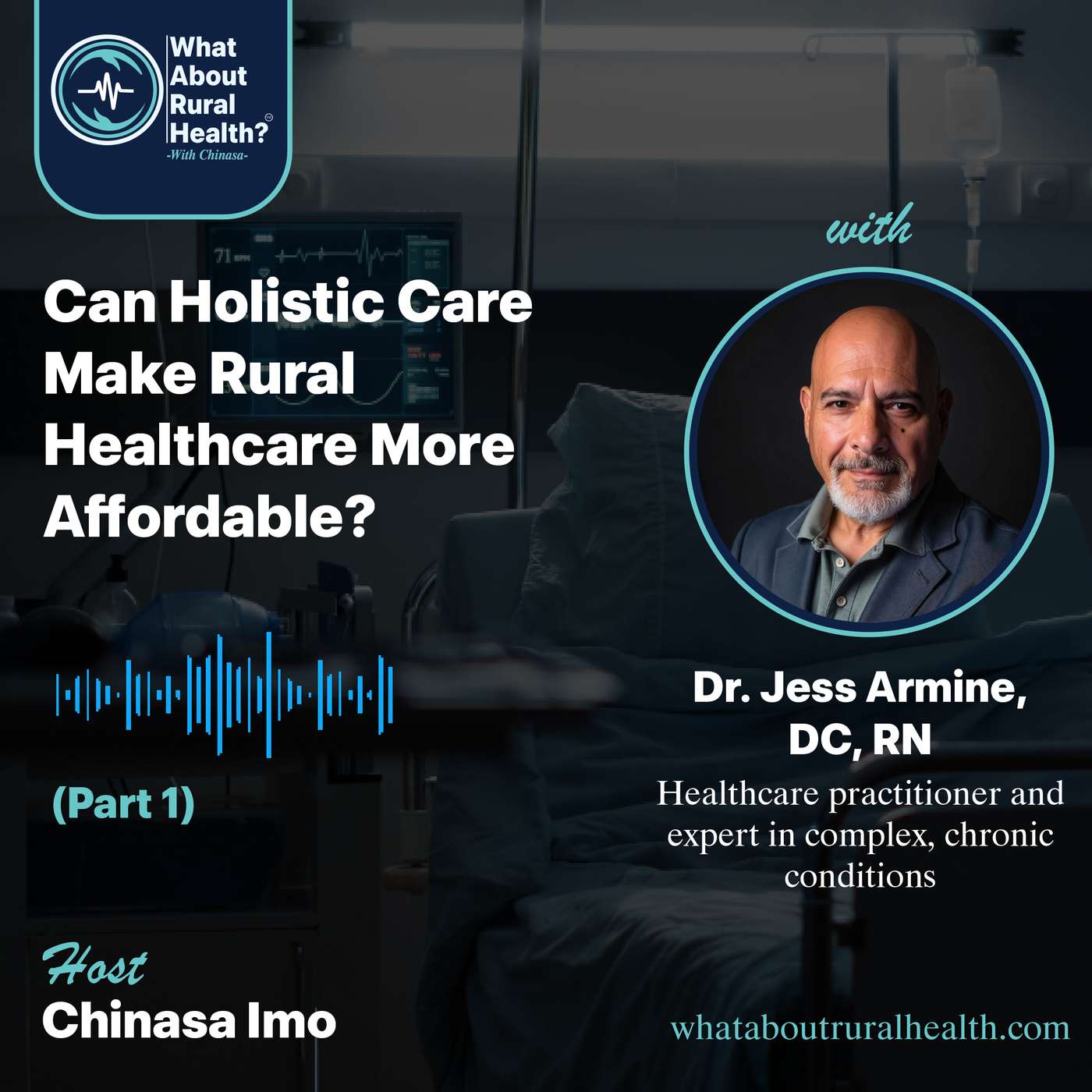
The shift is not abstract for Dr. Jess Armine, who has spent 50 years in healthcare, starting as an EMT and paramedic in New York City, then a registered nurse, then an Army nurse, before training as a chiropractor with a specialty in neuroendoimmunology. Speaking on the What About Rural Health? with Chinasa Imo podcast, he traced the collapse of the family doctor back to a specific decade. “I literally watched this happen where instead of going into general practice, it was a shift towards specialties,” he said.
Enjoying this article? Hear the full conversation with Dr. Jess Armine on What About Rural Health.
When One Doctor Knew the Whole Family
Armine points to the era of 70s TV doctor Marcus Welby, MD as a cultural shorthand for what came before: a single physician who managed everything and answered to no productivity quota. This wasn’t an exception at the time, Armine shares that he had his own version in real life. “Dr. Siegel, he knew everything. He knew me, he knew my parents, and he knew my grandparents,” Armine said. That doctor made house calls for a 103-degree fever and served as the gatekeeper for every specialist referral, translating results back in plain terms the patient could trust.
Ironically, the 1970s broke that model. General practice was pushed aside in favor of specialization, Armine said, and nobody replaced the coordinating function the family doctor used to serve. A patient with abdominal pain might now need to work out for herself whether the cause is gastrointestinal, gynecological, or urological, then book and manage each appointment on her own. “So they’ll go to one specialist and then another and another,” Armine said, without anyone assembling the pieces. The result, in his words: “The onus of diagnosis is on the person least trained to do it: the patient.”
“The onus of diagnosis is on the person least trained to do it: the patient.”
Primary Care Squeezed for Time
What remains of primary care is squeezed for time. The average primary care visit now runs about 18 minutes of direct contact, according to 2024 research on visit duration, even as scheduled slots are often 30 minutes once documentation time is factored in. Armine traces the squeeze to corporate ownership of medical practices: “Medicine became corporatized and corporations want productivity, so they forced the doctors into these models where they needed to see four to six patients an hour.” That pace pushed many practices to lean on physician assistants and nurse practitioners just to keep up.
The Rural Gap
The gap is widest outside cities. Rural counties average roughly 98 physicians per 100,000 residents compared with 286 in urban areas, according to the AAMC, while rates of utilization are similar in both. Meanwhile, a January 2024 Joint Economic Committee analysis found 91 percent of rural counties face a primary care physician shortage. Where the old model relied on one trusted doctor down the street, rural patients today often have neither that generalist nor easy access to the specialists who replaced them.
Want more conversations like this one? Subscribe to the What About Rural Health newsletter for new episodes, articles, and rural health financing insights.
Armine’s account describes a system that traded relationship-based medicine for volume, then handed patients the job of diagnosis without the training to do it. The fix he points to, implicitly, is what the old GP model provided for free: someone accountable for the whole patient, not just one organ system.
Sources
- Healio, “Average primary care exam lasts less than 20 minutes”
- American Medical Association, “Primary care visits run a half hour. Time on the EHR? 36 minutes”
- AAMC, “Rethinking Rural Health”
- Joint Economic Committee, “Addressing Rural Health Worker Shortages Will Improve Population Health and Create Job Opportunities”
More From This Conversation
- Full transcript: Holistic Care and Rural Healthcare Costs
- Listen to Part 1
- Listen to Part 2
- The Cellular Root of Post-COVID Fatigue
- The Reimbursement Math That Shapes How You Get Treated
- Dr GPT Is Always Ready to See You
- What Actually Works for the Rural Healthcare Gap
Editor’s note: The views in this conversation are the guest’s own and do not necessarily reflect those of What About Rural Health. This article is for information only. It is not medical advice. Please talk to a qualified health professional about your own care.