About this episode
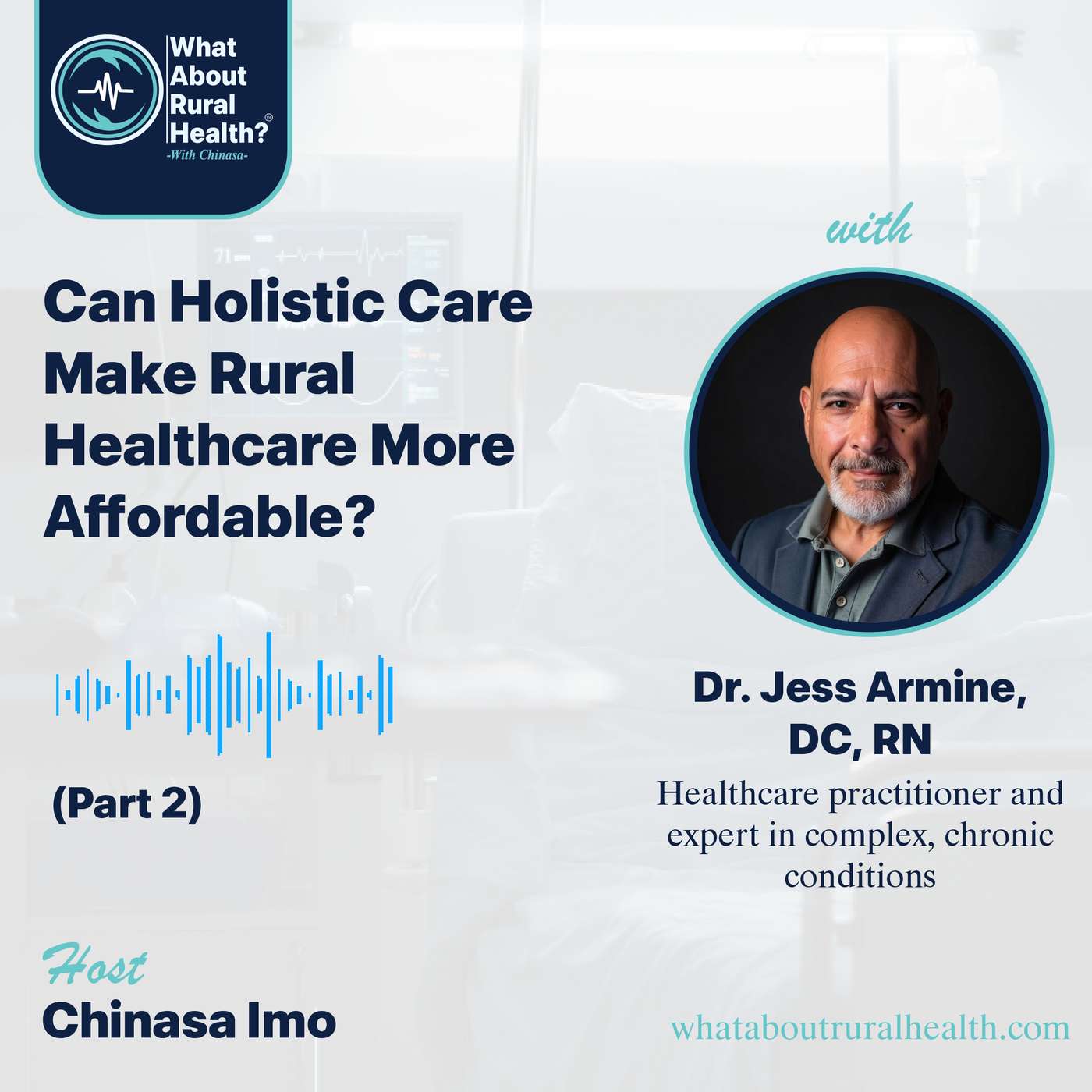
Affordable holistic healthcare can be difficult to achieve when rural patients must navigate fragmented services, long travel distances, and repeated specialist visits. In Part 2 of this conversation on What About Rural Health?™, Dr. Jess Armine, DC, RN, joins Chinasa Imo to examine whether functional and integrative care can make rural healthcare more coordinated, accessible, and affordable.
Drawing on nearly five decades across emergency care, nursing, chiropractic, and functional medicine, Dr. Armine explains how specialization can separate symptoms from the whole patient. He discusses mitochondrial dysfunction, chronic illness, insurance reimbursement, telemedicine, nurse practitioners, and practical local care models for rural communities.
This is Part 2 of a two part conversation. Begin with Part 1: Can Holistic Care Make Rural Healthcare More Affordable?.
Why does fragmented care affect rural patients?
Fragmented care requires patients to move between clinicians who may each focus on one organ system or diagnosis. Rural patients can face longer travel, fewer specialists, limited appointment availability, and higher indirect costs from transportation and time away from work.
A coordinated approach can help clinicians see how symptoms, medications, daily life, environment, and chronic conditions interact. The goal is not to replace necessary specialty care, but to improve communication and reduce avoidable repetition.
Can affordable holistic healthcare lower rural healthcare costs?
Holistic care may reduce waste when it improves continuity, prevention, and understanding of a patient’s full history. Longer consultations can uncover patterns that brief visits miss, but payment systems often reward volume and procedures more than time spent listening and coordinating care.
Dr. Armine describes why insurance reimbursement can make extended functional medicine visits difficult to sustain. The conversation asks how rural health systems can balance affordability, clinical quality, appropriate testing, and access without shifting excessive costs to patients.
What role can nurse practitioners and telemedicine play?
Nurse practitioners can expand primary care capacity and provide ongoing management in communities with physician shortages. When supported by clear referral pathways, collaborative teams, and appropriate regulation, they can help patients receive care closer to home.
Telemedicine can connect rural clinicians and patients with additional expertise, reduce some travel, and support follow up. It works best when communities also have reliable broadband, private spaces, local examination capacity, and plans for patients who need in person services.
How does mitochondrial health relate to chronic illness?
Mitochondria help cells produce energy. Dr. Armine discusses how acquired mitochondrial dysfunction may contribute to fatigue and complex chronic symptoms, including problems reported after COVID 19. He encourages clinicians to consider the patient’s history, physiology, and multiple body systems rather than treating every symptom in isolation.
This discussion is educational and does not replace individualized medical care. Patients should consult qualified healthcare professionals for diagnosis and treatment, especially when symptoms are severe, new, or worsening.
What would a practical rural care model include?
- Accessible primary care led by trusted local clinicians
- Nurse practitioners working within collaborative teams
- Functional and integrative expertise for complex cases
- Telemedicine connections to appropriate specialists
- Clear referral and follow up pathways
- Payment models that support prevention and coordination
- Patient education and shared decision making
- Measurement of outcomes, affordability, and equity
About the guest
Dr. Jess Armine, DC, RN, is trained in chiropractic, nursing, functional medicine, nutrigenomics, neuro endo immunology, and related approaches to complex chronic conditions. His earlier conventional healthcare experience includes work as an EMT and paramedic and as a registered nurse in emergency and cardiac intensive care.
Who should listen?
This episode is for rural patients, primary care clinicians, nurse practitioners, health system leaders, community health organizations, policymakers, insurers, researchers, and anyone interested in coordinated care, functional medicine, chronic illness, telehealth, and rural healthcare affordability.
Frequently asked questions
What is holistic care in rural healthcare?
Holistic care considers the patient’s symptoms, history, environment, daily life, and multiple body systems while coordinating appropriate conventional, preventive, and supportive services.
Can telemedicine solve rural healthcare shortages?
Telemedicine can improve access to consultation and follow up, but it cannot replace every examination or procedure. It is most effective when paired with reliable local services and referral pathways.
Why are nurse practitioners important in rural communities?
Nurse practitioners can expand primary care access, manage chronic conditions, provide prevention, and coordinate referrals in areas with limited clinician supply.
Can functional medicine reduce healthcare costs?
It may reduce avoidable duplication when it improves coordination and prevention, but affordability depends on evidence, appropriate testing, payment design, and whether services are accessible to patients.
Resources from this episode
About What About Rural Health?™
What About Rural Health?™ explores how healthcare is accessed, financed, governed, and delivered in rural and underserved communities. Hosted by Chinasa Imo, the podcast brings together researchers, policymakers, health professionals, community leaders, innovators, and people working within health systems.
Work with What About Rural Health?™
For guest, partnership, sponsorship, media, and collaboration inquiries, contact info@whataboutruralhealth.com.
Support What About Rural Health?™