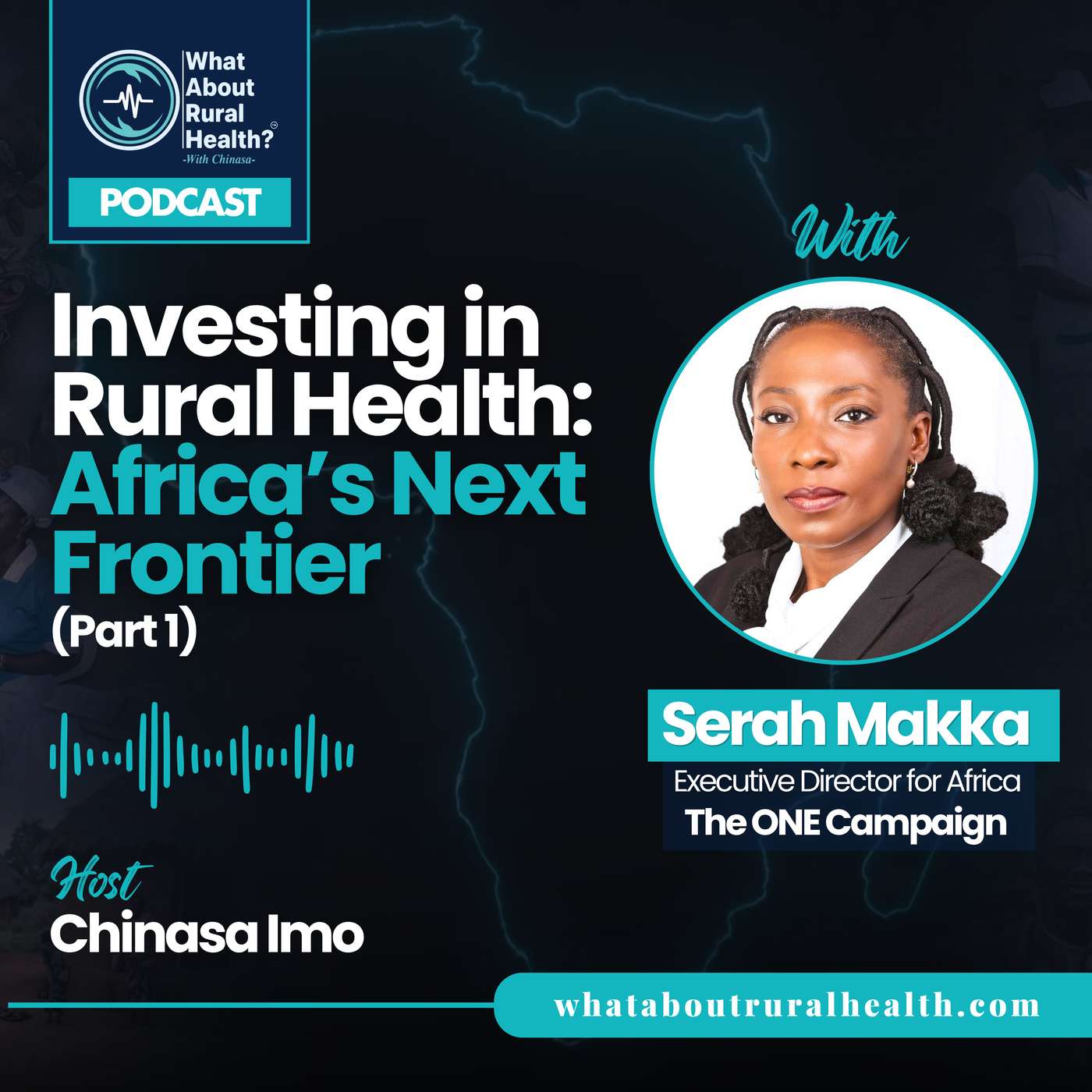
Out-of-pocket spending is the dominant way African households actually pay for healthcare today, forcing families into trade-offs between medical bills and basic needs like food or school fees. Serah Makka points to Nigeria’s roughly 30,000 primary health centers and its Basic Health Care Provision Fund as an example of where financing reform is being tested, and argues that import dependence for medical products is a hidden driver of cost.
Serah Makka is Executive Director for Africa at The ONE Campaign, focused on strategic advocacy for economic and social transformation across the continent, including how rural and underserved communities actually pay for care. Her policy background includes financial inclusion work and a master’s degree from Harvard’s Kennedy School.
In What About Rural Health?™ with Chinasa Imo, Makka described a health financing model where, despite conversations about international donors and domestic government budgets, the money that actually shows up at the point of care mostly comes directly from patients’ pockets. The share can run as high as 70% in some countries. “People reach into their pockets and they pay for health care,” she said. She argued this isn’t just a funding gap, it actively impoverishes families and pushes them into trade-offs, choosing between paying a hospital bill and keeping a child in school. She put the choice as a question: “Do they go to school or do they have a hospital bill that is outstanding?” The fix, she proposed, isn’t just more money but a shift toward prevention and stronger primary care, since catching problems early at the community level is cheaper than treating them once they escalate.
“Do they go to school or do they have a hospital bill that is outstanding?”
Enjoying this article? Hear the full conversation with Serah Makka on What About Rural Health.
Public data supports the scale of the problem. WHO’s African Region Health Expenditure Atlas found out-of-pocket payments made up more than a quarter of health spending in 31 African countries, more than half in 11 countries, and above 70% in three. Separately, World Bank data put the sub-Saharan Africa-wide average closer to the mid-30s percent range over the past two decades, still roughly double the 15-20% ceiling health economists consider sustainable before it starts pushing households into poverty. WHO estimates these costs push more than 150 million people across the region into or deeper into poverty each year.
On Nigeria specifically, Makka referenced around 30,000 primary health centers serving roughly 200 million people, and mentioned the Basic Health Care Provision Fund as a mechanism meant to get more of that spending working at the community level. That fund was operationalized in 2019 to guarantee at least one functional primary health facility per political ward, though implementation data suggests a large share of the country’s roughly 31,000 PHCs remain underfunded or non-functional, underscoring the financing gap she described rather than closing it.
Want more conversations like this one? Subscribe to the What About Rural Health newsletter for new episodes, articles, and rural health financing insights.
Sources
- WHO Africa, “UHC Day: High health-care costs in Africa continue to push over 150 million into poverty”
- WHO African Region Health Expenditure Atlas 2023
- World Bank, Out-of-pocket expenditure (% of current health expenditure), Sub-Saharan Africa
- NPHCDA, Basic Health Care Provision Fund overview
- BusinessDay Nigeria, “N32bn basic health funds lie idle as PHCs struggle nationwide”
More From This Conversation
- Listen to Part 1
- Listen to Part 2
- Read the full transcript
- Making Rural Health Investable, One Pharmacy at a Time
- Africa’s Global Health Story Gets Written by Everyone Else
- Why Africa Needs to be Off the Receiving End of Aid
- Diaspora Money, Debt Swaps, and Nurses: Africa’s New Health Financing Toolkit
Editor’s note: The views in this conversation are the guest’s own and do not necessarily reflect those of What About Rural Health. This article is for information only. It is not medical advice. Please talk to a qualified health professional about your own care.