About this episode
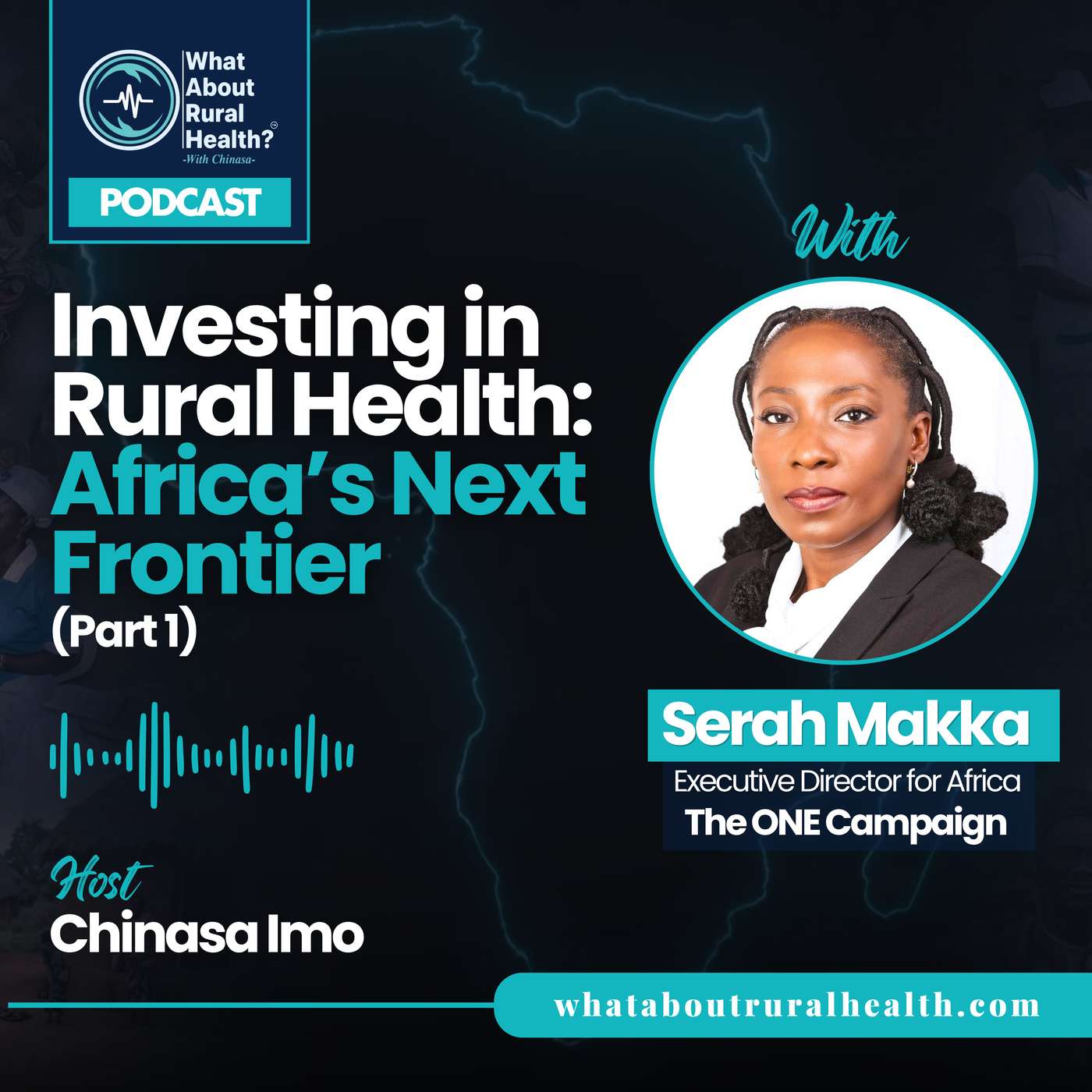
Rural healthcare financing in Africa must move beyond charity and short term aid toward investment, shared responsibility, and African financial agency. In Part 1 of this conversation on What About Rural Health?™, Serah Makka, Executive Director for Africa at The ONE Campaign, joins Chinasa Imo to reframe rural health as a strategic investment frontier.
Serah connects rural healthcare to economic opportunity, research and development, workforce innovation, digital health, disease surveillance, climate resilience, and public health security. She discusses diaspora funded insurance, debt for health swaps, and structured agreements for health worker mobility that protect workers while reinvesting in African health systems.
This is Part 1 of a two part conversation. Continue with Part 2: Investing in Rural Health: Africa’s Next Frontier.
Why must rural health be reframed as an investment?
Describing rural health only through scarcity and need can obscure the economic and social value created by healthier communities. Strong rural health systems support productivity, education, local employment, disease detection, and resilience during emergencies.
Serah argues that investment language changes the questions decision makers ask. Instead of treating rural care as a permanent charity expense, policymakers and funders can identify assets, build local markets, measure returns, and support solutions capable of lasting beyond one grant cycle.
What does African financial agency look like?
African financial agency means greater domestic ownership of health priorities, stronger negotiating power, and financing approaches designed around local realities. It does not mean rejecting international partnership. It means building partnerships in which African governments, institutions, communities, and experts have meaningful authority.
The conversation examines how global health narratives and institutions shape which problems attract attention and how resources are allocated. Africa’s response to COVID 19 and mpox also demonstrates resilience, innovation, and the importance of regional cooperation.
Can diaspora funded insurance expand access?
Diaspora communities already send substantial resources to relatives and local institutions. Structured insurance arrangements could channel some of that support into predictable health coverage instead of relying only on emergency payments after illness occurs.
A workable model would require trust, transparent administration, defined benefits, consumer protection, and partnerships with dependable local providers. The objective is to convert fragmented payments into financial protection and more consistent access to care.
How could debt for health swaps work?
Debt for health swaps can allow part of a country’s debt obligation to be redirected toward agreed health investments. When designed transparently, these arrangements may create fiscal space for primary healthcare, workforce development, infrastructure, or other priorities.
Clear accountability is essential. Governments, creditors, civil society, and health leaders need shared measures so that redirected funds produce verifiable improvements rather than replacing existing commitments.
How can health worker migration become mutually beneficial?
Health worker migration is often described only as brain drain, but Serah proposes structured country to country agreements. Destination countries that recruit trained professionals could help finance education, workforce replacement, and system strengthening in source countries.
Such agreements should protect workers’ rights and choices while recognizing the public investment required to train clinicians. Regional and continental bargaining can help African countries negotiate fairer terms.
What should policymakers and funders prioritize?
- Domestic financing and accountable public investment
- Regional and continental negotiating power
- Diaspora linked health insurance with strong consumer protection
- Transparent debt for health arrangements
- Fair health worker mobility agreements
- Rural research, digital health, and disease surveillance
- Climate resilient infrastructure and primary healthcare
- Local leadership in financing and program design
About the guest
Serah Makka is the Executive Director for Africa at The ONE Campaign. A development finance and policy expert, she brings more than two decades of experience across Africa, Europe, and the Middle East in governance, financial inclusion, technology policy, strategic philanthropy, sustainable financing, innovation, and accountability.
Who should listen?
This episode is for African health policymakers, development finance leaders, rural health advocates, public health professionals, diaspora organizations, researchers, workforce planners, funders, and anyone interested in sustainable healthcare financing across Africa.
Frequently asked questions
What is rural healthcare financing in Africa?
It includes public budgets, insurance, household spending, development finance, private investment, and international support used to fund rural health workers, facilities, services, technology, and infrastructure.
What is diaspora funded health insurance?
It is a model in which diaspora contributions help purchase defined health coverage for families or communities, turning irregular emergency payments into more predictable financial protection.
What is a debt for health swap?
It is an agreement that redirects part of a country’s debt obligation toward approved domestic health investments, usually with agreed accountability and reporting requirements.
How can health worker migration support African health systems?
Structured agreements can protect mobile workers while destination countries help finance training, replacement, and health system strengthening in source countries.
Chapters
00:00 Rethinking rural health financing
04:21 Introducing Serah Makka
05:53 Misunderstood narratives about health in Africa
08:39 Africa in global health systems and vaccine value chains
13:19 How the global health architecture was built
15:42 From recipient status to African financial agency
18:27 Why sustainable financing must be led by Africans
22:13 Health financing amid debt and shrinking aid
24:19 Diaspora funded health insurance and HealthBridge
27:05 Debt for health swaps
28:05 Health worker mobility, protection, and reinvestment
32:14 Building continental leverage
34:23 Rural health investment beyond clinics
35:20 Closing reflections
Resources from this episode
About What About Rural Health?™
What About Rural Health?™ explores how healthcare is accessed, financed, governed, and delivered in rural and underserved communities. Hosted by Chinasa Imo, the podcast connects researchers, policymakers, health professionals, community leaders, and innovators examining the decisions shaping rural healthcare worldwide.
Work with What About Rural Health?™
For guest, partnership, sponsorship, media, and collaboration inquiries, contact info@whataboutruralhealth.com.
Support What About Rural Health?™