Three domestic financing mechanisms have the potential to fund African healthcare without relying on traditional donor aid: a diaspora remittance-linked insurance product, debt-for-health swaps with creditor nations, and structured deals around health-worker migration. Remittances into Africa already outpace both foreign aid and, in most years, foreign direct investment, and debt-for-health swaps and bilateral nurse-migration agreements are already in use, albeit at a small scale.
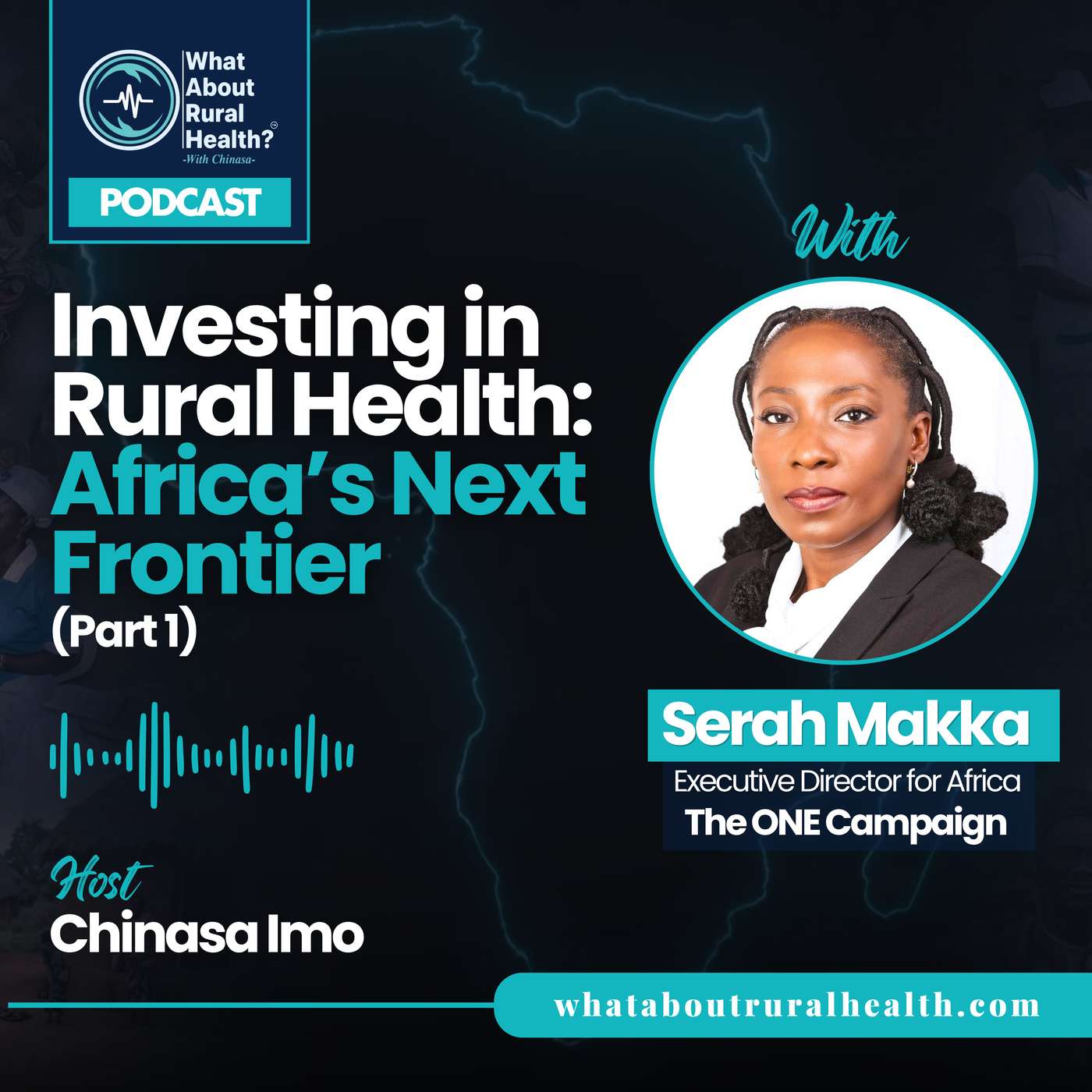
Serah Makka is Executive Director for Africa at The ONE Campaign, where she works on strategic advocacy for economic and social transformation across the continent, with a particular focus on financing models that reduce reliance on traditional donor aid. Her background spans governance, financial inclusion and public policy, including a master’s from Harvard’s Kennedy School.
The first mechanism Makka described is a diaspora insurance product her organization calls Health Bridge. The idea, as she explained it, is that money African migrants already send home to cover a relative’s medical bill gets redirected instead into an insurance pool that lowers the cost of care for that same recipient and, over time, subsidizes coverage for people without a relative abroad to send them money. The family tie stays; only the purpose of the transfer changes. “We’re saying still send it to your sister but send it for insurance,” she said. She argued this matters because remittances already dwarf other external financing flows into Africa, a comparison that holds up in public data. Africa received roughly $100 billion in remittances in 2023, more than double the roughly $42 billion in official development assistance and ahead of the roughly $48 billion in foreign direct investment that year.
Enjoying this article? Hear the full conversation with Serah Makka on What About Rural Health.
The second mechanism is debt-for-health swaps, where a country renegotiates part of what it owes a creditor nation in exchange for redirecting a share of that debt service into domestic health spending. This is not a hypothetical: Spain has cancelled tens of millions of euros in debt owed by Cameroon, Ethiopia and the Democratic Republic of Congo on the condition that a portion gets reinvested into HIV, TB and malaria programs, and the Global Fund’s Debt2Health initiative has moved over $200 million into health programs globally, including roughly $79 million in Africa. Africa CDC has separately said it wants to scale a debt-swap financing model worth up to a billion dollars for pandemic preparedness.
“Africa is greening, Europe is greying, the rest of the world is greying.”
The third mechanism concerns structured deals around health-worker migration, turning outbound nurses and doctors from a workforce loss into a negotiated asset, with receiving countries funding training pipelines in exchange for recruitment access. Makka framed it as demographics: “Africa is greening, Europe is greying, the rest of the world is greying.” Kenya’s bilateral agreements with the UK and Germany follow roughly this shape: the UK-Kenya deal, signed in 2021, has moved hundreds of nurses into the NHS while building in Kenyan training investment, and a similar labor agreement with Germany was formalized in 2024.
Want more conversations like this one? Subscribe to the What About Rural Health newsletter for new episodes, articles, and rural health financing insights.
Sources
- ISS Africa, “Remittances as development finance: Africa’s overlooked billions”
- Health Policy Watch, “Africa Wants Debt Swaps To Support Countries’ Defences Against Pandemics”
- Premium Times Nigeria, “Africa CDC seeks $1bn health financing model through debt Swaps”
- PMNCH/WHO, “From Debt Burden to Health Investment: How Debt Swaps Can Finance Women’s and Children’s Health”
- Ministry of Health Kenya, “Assessment of Kenya-UK Bilateral Agreement on Health Workforce”
- ILO, “Kenya-Germany bilateral labour agreement solidifies path for skilled labour migration”
More From This Conversation
- Listen to Part 1
- Listen to Part 2
- Read the full transcript
- Making Rural Health Investable, One Pharmacy at a Time
- Africa’s Global Health Story Gets Written by Everyone Else
- Why Africa Needs to be Off the Receiving End of Aid
- The Real Way Rural Africans Pay for Healthcare: Their Own Pockets
Editor’s note: The views in this conversation are the guest’s own and do not necessarily reflect those of What About Rural Health. This article is for information only. It is not medical advice. Please talk to a qualified health professional about your own care.