About this episode
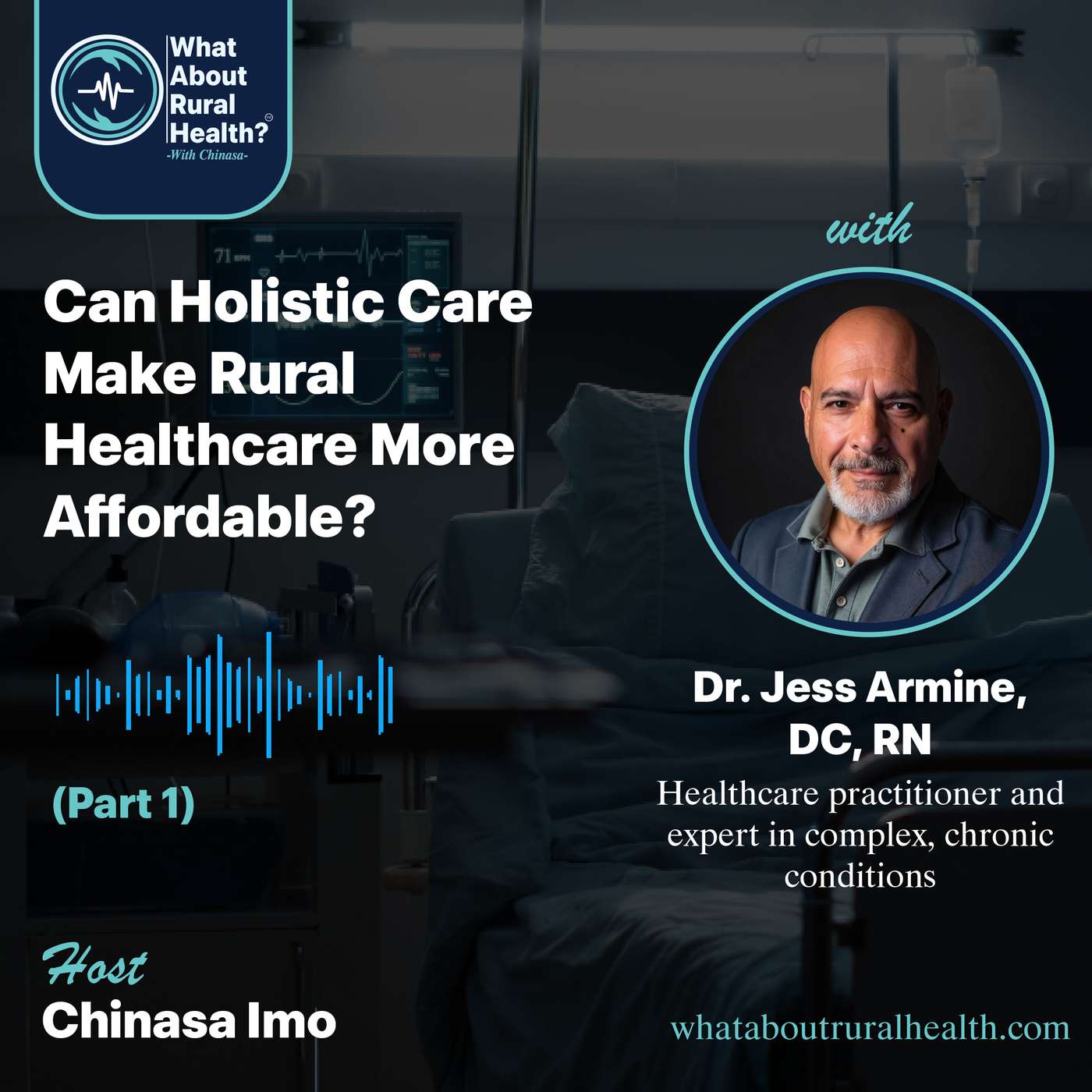
Holistic rural healthcare can help patients receive more coordinated care when distance, workforce shortages, and fragmented services make it difficult to see the whole clinical picture. In Part 1 of this conversation on What About Rural Health?™, Dr. Jess Armine, DC, RN, joins Chinasa Imo to explore the limits of highly specialized care and the value of listening to the patient.
Dr. Armine draws on nearly five decades across emergency care, nursing, chiropractic, and functional medicine. He discusses whole person assessment, complex chronic illness, mitochondrial function, prevention, patient history, and why rural communities need care models that connect rather than separate services.
This is Part 1 of a two part conversation. Continue with Part 2: Can Holistic Care Make Rural Healthcare More Affordable?.
What is holistic rural healthcare?
Holistic rural healthcare considers the patient’s symptoms, history, environment, daily life, access barriers, and multiple body systems. It does not mean rejecting conventional medicine or specialist care. It means coordinating appropriate services around the person rather than treating each problem in isolation.
This approach is especially relevant in rural areas, where patients may travel long distances, wait for appointments, or rely on a small number of clinicians. A strong local primary care relationship can help organize referrals, review medications, support prevention, and identify when specialist or emergency care is needed.
Why can medical fragmentation harm rural patients?
Specialization has produced important expertise, but separate services can create gaps when no one is responsible for assembling the full picture. Patients may repeat their history, undergo duplicative testing, receive conflicting advice, or struggle to understand how several diagnoses relate.
Rural patients often bear additional financial and logistical costs. Transportation, time away from work, caregiving arrangements, and limited local services can turn each referral into a major burden. Better coordination can improve continuity and reduce avoidable complexity.
Why does listening matter in complex chronic illness?
Dr. Armine argues that a detailed history is one of the most valuable clinical tools. Symptoms that appear unrelated may follow a shared timeline or respond to the same environmental, nutritional, infectious, or physiological factor.
Listening also supports trust. Patients with long term or poorly understood symptoms may have experienced dismissal or repeated consultations without clear answers. A careful, respectful conversation can help clinicians decide what needs urgent investigation, what requires referral, and what can be managed over time.
How does cellular energy relate to health?
Mitochondria help cells produce energy. Dr. Armine discusses acquired mitochondrial dysfunction as one possible factor in fatigue and complex chronic symptoms. He uses a cellular perspective to explain why illness may affect several body systems rather than remaining confined to a single organ.
This discussion is educational and does not establish a diagnosis for any individual. People with new, severe, or worsening symptoms should seek evaluation from qualified healthcare professionals.
What should a coordinated rural care model include?
- Accessible primary care and continuity with trusted clinicians
- Whole person histories and medication review
- Clear referral pathways for specialty and emergency care
- Prevention, patient education, and shared decision making
- Telehealth that supports rather than replaces local services
- Collaboration among physicians, nurses, nurse practitioners, and other professionals
- Payment that recognizes coordination and time spent listening
- Evaluation of outcomes, affordability, and health equity
About the guest
Dr. Jess Armine, DC, RN, is trained in chiropractic, nursing, functional medicine, nutrigenomics, neuro endo immunology, and related approaches to complex chronic conditions. His earlier conventional healthcare experience includes work as an EMT and paramedic and as a registered nurse in emergency and cardiac intensive care.
Who should listen?
This episode is for rural patients, primary care clinicians, nurses, nurse practitioners, health system leaders, community organizations, policymakers, researchers, and anyone interested in coordinated care, functional medicine, chronic illness, patient centered care, and rural health equity.
Frequently asked questions
Does holistic healthcare replace conventional medicine?
No. A responsible holistic approach coordinates appropriate conventional assessment, emergency care, specialty services, prevention, and supportive care around the patient’s needs.
Why is coordinated care important in rural communities?
Coordination can reduce repeated travel, duplicated testing, conflicting recommendations, and gaps between local primary care and distant specialists.
What is functional medicine?
Functional medicine examines interactions among history, physiology, behavior, environment, and illness. Its services, tests, and treatments should be evaluated for evidence, safety, cost, and relevance to each patient.
How can rural patients prepare for a complex care visit?
Patients can bring a medication list, timeline of symptoms, prior results, questions, and information about travel, cost, and caregiving barriers that affect their ability to follow a care plan.
Resources from this episode
About What About Rural Health?™
What About Rural Health?™ explores how healthcare is accessed, financed, governed, and delivered in rural and underserved communities. Hosted by Chinasa Imo, the podcast brings together researchers, policymakers, health professionals, community leaders, innovators, and people working within health systems.
Work with What About Rural Health?™
For guest, partnership, sponsorship, media, and collaboration inquiries, contact info@whataboutruralhealth.com.
Support What About Rural Health?™