About this episode
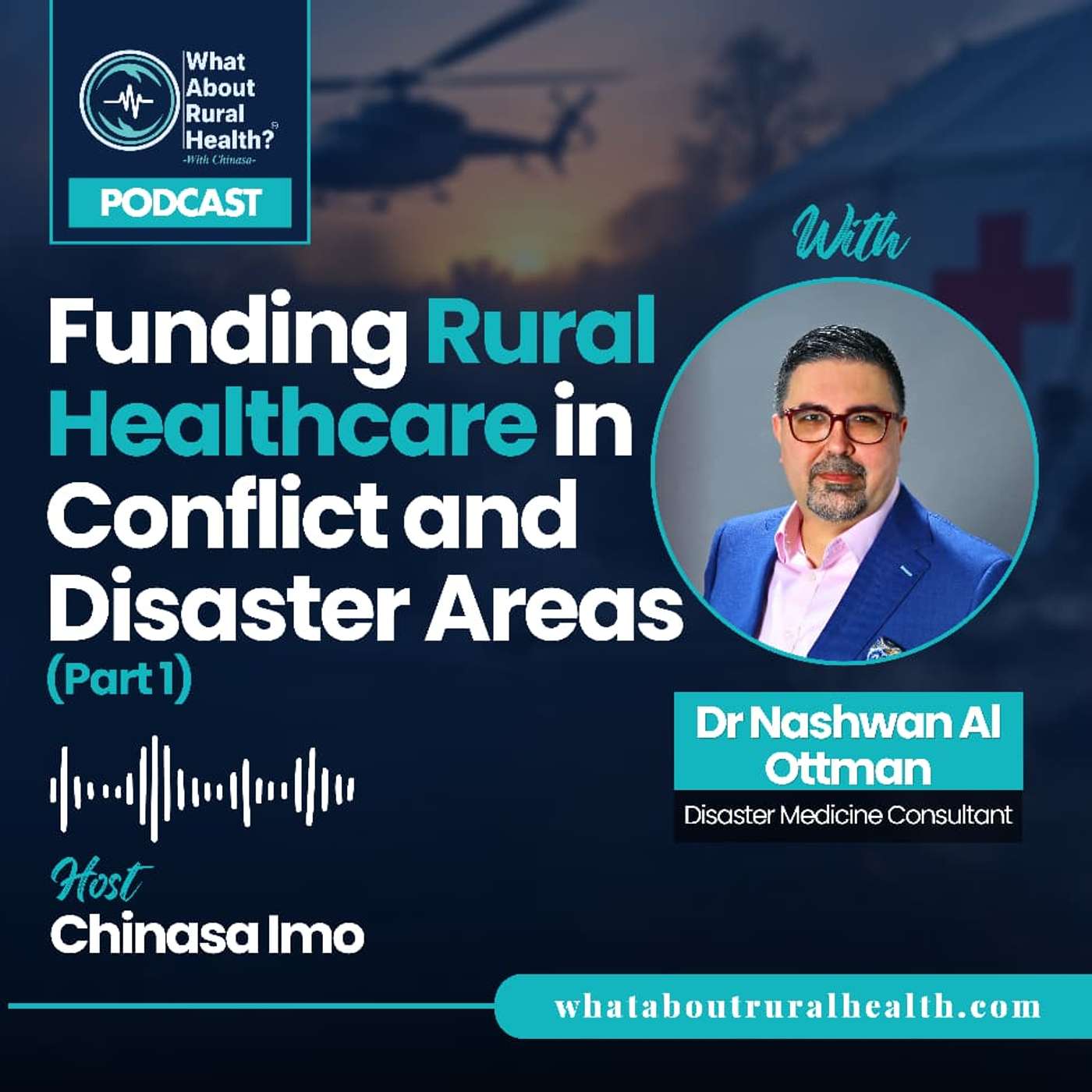
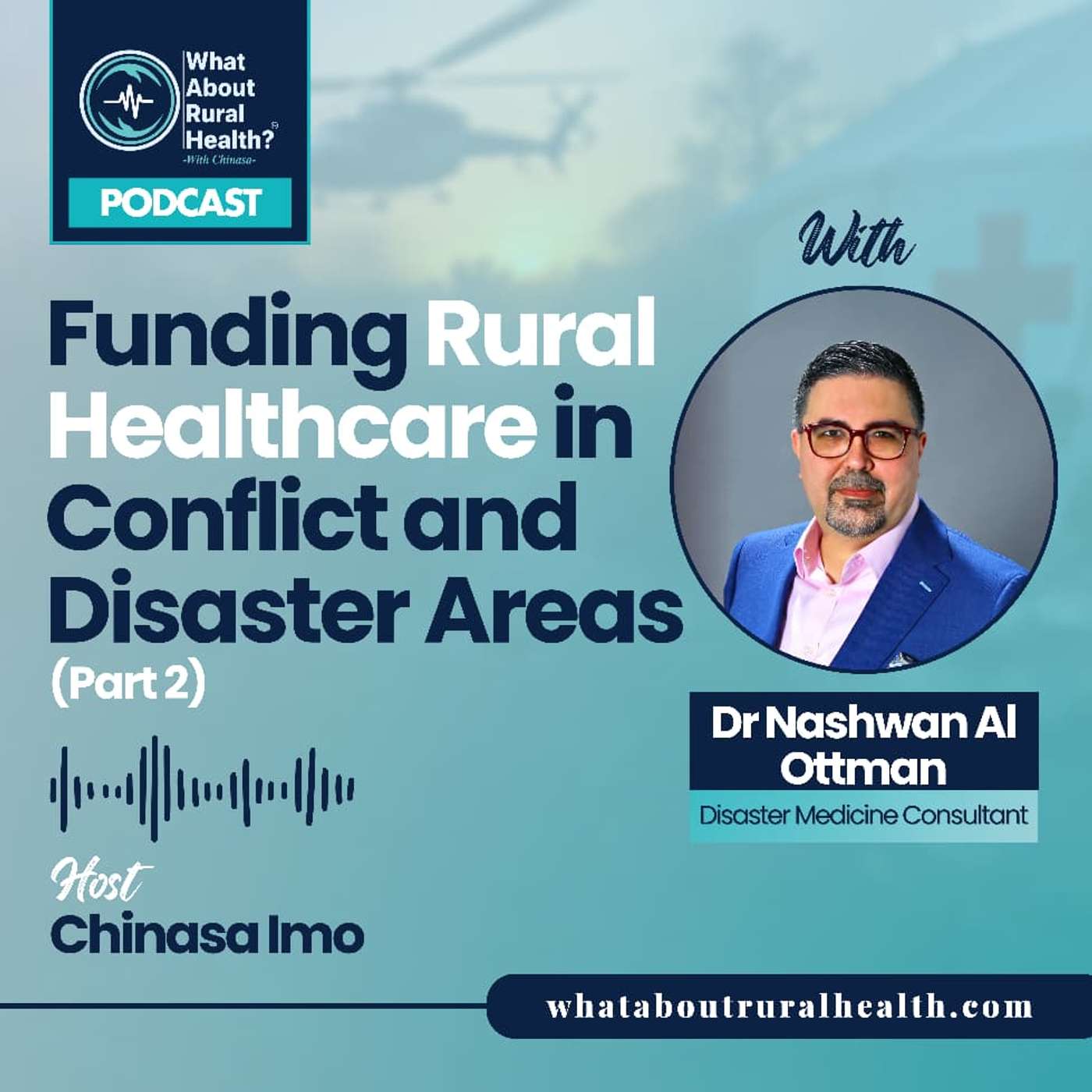
Humanitarian health financing must reach rural communities before conflict or disaster destroys access to essential care. In Part 2 of this conversation on What About Rural Health?™, Dr Nashwan Al Othman joins Chinasa Imo to examine how governments, humanitarian organizations, funders, and local health leaders can finance rural healthcare before, during, and after crises.
Dr Al Othman argues that the current response system often takes six to twelve months to mobilize major resources after a crisis is declared, while prepositioned regional or national funds can move within days. He calls for flexible multiyear grants, permanent support for community health workers, protected medical supply chains, mobile care, and financing structures that strengthen local capacity instead of waiting for an emergency appeal.
This is Part 2 of a two part conversation. Begin with Part 1: Funding Rural Healthcare in Conflict and Disaster Areas.
Why must rural healthcare be financed before a crisis?
Conflict and disaster can interrupt transportation, electricity, communications, staffing, medicines, and referral pathways at the same time. Rural communities are especially vulnerable because facilities may already operate with limited personnel, equipment, and financial reserves.
Financing that arrives only after systems collapse is slower and often more expensive. Dr Al Othman explains that advance planning allows health leaders to protect essential services, position supplies, identify referral options, train teams, and build trusted local partnerships before disruption reaches its worst point.
What makes humanitarian health financing effective?
Effective humanitarian health financing is flexible, timely, locally informed, and designed for continuity. Short funding cycles can force organizations to rebuild the same temporary systems repeatedly. Multiyear funding gives rural facilities and community partners more room to plan, retain workers, maintain supplies, and adapt when conditions change.
Local leadership is essential. Community health workers and rural clinicians understand travel routes, cultural expectations, security risks, language needs, and the practical barriers patients face. Treating these workers as permanent health infrastructure strengthens emergency response and everyday care at the same time.
How can rural health systems protect essential services?
Resilient rural health systems need more than emergency medical teams. They require protected health workers, dependable communication, diversified supply routes, mobile services, functioning referral networks, and clear plans for restoring facilities after damage.
Mobile clinics can extend care when buildings are inaccessible, but they work best when connected to local providers and referral systems. Similarly, emergency stockpiles are useful only when procurement, storage, transportation, and distribution remain coordinated. Dr Al Othman emphasizes that financing must support the complete system rather than isolated interventions.
What should funders and policymakers prioritize?
- Prepositioned national or regional emergency health funds
- Flexible multiyear grants that can respond to changing conditions
- Permanent financing for community health workers
- Protection, training, and retention of rural health professionals
- Reliable medical supply chains and alternative delivery routes
- Mobile healthcare linked to local facilities and referral pathways
- Community led preparedness and trusted local partnerships
- Reconstruction plans that strengthen long term rural health resilience
About the guest
Dr Nashwan Al Othman, MD, MBA is a physician, endocrinologist, healthcare management consultant, and disaster medicine expert. His work spans healthcare delivery, global health, emergency response, and health system resilience in conflict and disaster settings.
Who should listen?
This episode is for health policymakers, humanitarian organizations, disaster medicine professionals, emergency planners, public health leaders, rural health advocates, researchers, funders, community health leaders, and anyone working to strengthen healthcare access in conflict affected or disaster prone communities.
Frequently asked questions
What is humanitarian health financing?
Humanitarian health financing is funding used to protect and deliver healthcare during conflicts, disasters, displacement, and other emergencies. Strong models also invest before a crisis so communities can maintain essential services and recover faster.
Why are rural communities more vulnerable during conflict and disaster?
Rural communities may have fewer clinicians, longer travel distances, limited referral options, fragile supply chains, and less financial capacity. When conflict or disaster disrupts transport and infrastructure, those existing barriers become more severe.
Why are flexible multiyear grants important?
Flexible multiyear grants allow local organizations and health facilities to plan, retain staff, maintain supplies, and adjust resources as conditions change. They reduce dependence on short emergency cycles that may arrive after services have already collapsed.
How do community health workers improve emergency response?
Community health workers bring local knowledge, trust, language skills, and direct contact with patients. Permanent investment in their work improves preparedness, early communication, continuity of care, and recovery.
Resources from this episode
- Dr Nashwan Al Othman
- World Health Organization: Health Emergency and Disaster Risk Management
- Share a rural health story
- Watch the full episode on YouTube
- Read the full transcript
About What About Rural Health?™
What About Rural Health?™ explores how healthcare is accessed, financed, governed, and delivered in rural and underserved communities. Hosted by Chinasa Imo, the podcast brings together researchers, policymakers, health professionals, community leaders, innovators, and people working within health systems to examine the decisions and structures shaping rural healthcare around the world.
Work with What About Rural Health?™
For guest, partnership, sponsorship, media, and collaboration inquiries, contact info@whataboutruralhealth.com.
Support What About Rural Health?™