About this episode
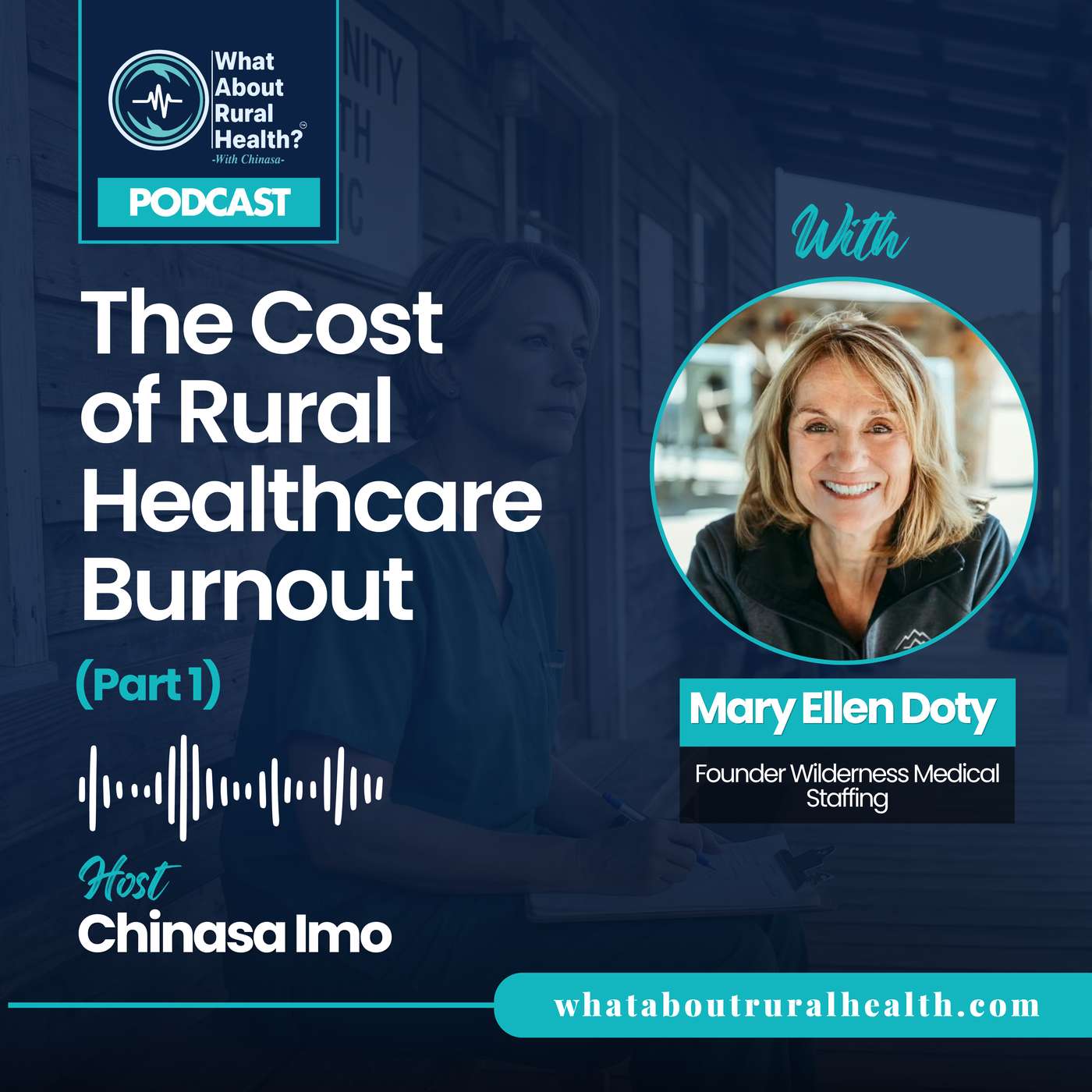
Rural healthcare burnout is not only a workforce problem. It directly affects whether people in remote communities can obtain timely, continuous, and trusted care. In this episode of What About Rural Health?™, Mary Ellen Doty, founder of Wilderness Medical Staffing, joins Chinasa Imo to explain why rural clinicians burn out, how staffing shortages affect patient access, and what sustainable rotational staffing can offer remote communities.
Drawing on nearly two decades of experience in remote Alaska, Mary Ellen describes the emotional and physical demands of practicing with limited resources, long travel distances, professional isolation, and little room for recovery. She also explains why conventional staffing models often fail rural facilities and how professional autonomy, community trust, continuity of care, and purposeful work can help clinicians rediscover meaning in medicine.
The central lesson is clear: sustainable rural healthcare requires workforce models designed around the realities of place. Rural facilities need staffing strategies that protect clinician wellbeing while maintaining reliable care for the communities they serve.
What causes rural healthcare burnout?
Rural healthcare burnout develops when high clinical responsibility is combined with limited staffing, scarce resources, professional isolation, and sustained emotional pressure. Clinicians may be responsible for a wide range of needs while working far from referral centers and without the support systems available in larger hospitals.
Mary Ellen distinguishes ordinary exhaustion from deeper forms of burnout linked to moral injury. A clinician may know what a patient needs but lack the staff, equipment, time, transportation, or institutional flexibility to provide it. Repeated exposure to that gap can erode wellbeing, retention, and trust in the healthcare system.
Why do staffing shortages matter in rural communities?
Healthcare staffing shortages influence much more than recruitment numbers. When a clinician leaves, rural patients may lose continuity, facilities may reduce services, and remaining staff may carry an even heavier workload. The result can be longer waits, delayed treatment, disrupted relationships, and greater pressure on already limited local systems.
Because rural and remote communities differ in geography, culture, infrastructure, and available resources, staffing solutions cannot simply be copied from urban health systems. Mary Ellen argues for approaches that respect local context and give clinicians the preparation, autonomy, and recovery time needed to remain effective.
How can rotational medical staffing support rural care?
Rotational medical staffing places qualified clinicians in rural and remote facilities for defined periods, followed by planned time away for rest and recovery. When thoughtfully managed, the model can help facilities maintain coverage, reduce chronic overload, and create a more sustainable professional rhythm.
Mary Ellen explains that the approach is not a substitute for community based care or long term investment. Its value lies in building dependable teams, supporting local relationships, and reducing the cycle in which overworked clinicians leave and remaining staff absorb the strain. Her rotational staffing model has served more than 150 rural and remote clinics.
Key topics in this conversation
- The real cost of rural healthcare burnout
- Why rural and remote clinics struggle to recruit and retain clinicians
- How healthcare staffing shortages affect access, continuity, and patient outcomes
- The relationship between professional autonomy and clinician wellbeing
- How rotational medical staffing can support remote communities
- Lessons from delivering care in rural Alaska and Indigenous communities
- Why rural workforce sustainability is also a healthcare financing issue
- How younger clinicians can be supported to enter and remain in rural practice
About the guest
Mary Ellen Doty is an advanced nurse practitioner, rural health entrepreneur, and founder of Wilderness Medical Staffing. Her work focuses on sustainable staffing for rural and remote healthcare settings. She is also the author of Medicine at 50 Below: A Memoir of Healthcare, Healing, and Hope in Rural Alaska.
Who should listen?
This conversation is for rural clinicians, nurses, nurse practitioners, hospital administrators, healthcare executives, workforce planners, public health professionals, medical staffing leaders, rural health researchers, policymakers, and students interested in rural, remote, and Indigenous health.
Frequently asked questions
What is rural healthcare burnout?
Rural healthcare burnout is the physical, emotional, and professional exhaustion that can result when clinicians work under persistent staffing shortages, isolation, limited resources, and high responsibility. It can reduce retention and threaten access to care.
How do rural staffing shortages affect patients?
Staffing shortages can reduce service availability, disrupt continuity, increase wait times, and place more pressure on the clinicians who remain. In remote communities, losing one provider may affect an entire local system.
What is rotational medical staffing?
Rotational medical staffing is a workforce model in which clinicians serve a rural or remote facility for planned periods and then receive scheduled time away. The goal is dependable coverage, recovery time, stronger retention, and continuity for patients.
Can rural healthcare burnout be prevented?
No single intervention solves burnout, but supportive leadership, realistic workloads, professional autonomy, adequate recovery time, reliable staffing, and workforce models designed for rural conditions can reduce the risk.
Resources from this episode
- Mary Ellen Doty official website
- Chinasa Imo official website
- Watch the full episode and access the transcript on YouTube
About What About Rural Health?™
What About Rural Health?™ explores how healthcare is accessed, financed, governed, and delivered in rural and underserved communities. Hosted by Chinasa Imo, the podcast brings together researchers, policymakers, health professionals, community leaders, innovators, and people working within health systems to examine the decisions and structures shaping rural healthcare around the world.
Work with What About Rural Health?™
For guest, partnership, sponsorship, media, and collaboration inquiries, contact info@whataboutruralhealth.com.
Support What About Rural Health?™