Rural Cardiovascular Disease – Communities Face Worsening Outcomes: Can We Reduce the Distance Tax?
By Lutfi Hakim Ariff and Chinasa Imo
Quick Summary:
- Rural Americans face a cardiovascular disease (CVD) mortality rate 1.5 times higher than their urban counterparts—a gap that is actively widening.
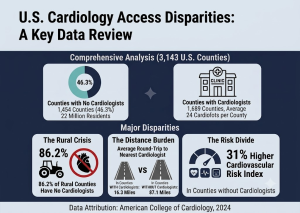
- A severe lack of local specialists (86.2% of rural counties have no cardiologist) creates a dangerous “distance tax” on life-saving care.
- Containing this crisis requires a two-pronged strategy: expanding access through mobile clinics and non-invasive therapies (like EECP), alongside leveraging low-bandwidth digital tools for proactive, local patient monitoring.
Adults living in rural areas are 1.5 times more likely to die from cardiovascular disease (CVD) than those in urban centers, and this mortality gap is actively widening. The compounding challenges of systemic lifestyle factors, limited healthcare access, and stark infrastructure barriers present a massive hurdle for public health practitioners and healthcare workers (HCWs) fighting to contain the situation.
CVD Cases Rising in Rural Communities
When it comes to rural cardiovascular disease, rural communities are facing an uphill battle. Patients in these areas often find their options for critical medical care severely restricted. Access to both routine and specialized care is deeply constrained, particularly in regions plagued by harsh travel conditions and geographic isolation from well-equipped healthcare facilities.
The human impact of these barriers is starkly reflected in mortality data. While cardiovascular death rates in urban areas are steadily declining due to medical advancements, they are rising in rural communities.
As with many rural health inequities, this divide is driven by the expansion of “medical deserts“—geographic areas devoid of adequate medical infrastructure.
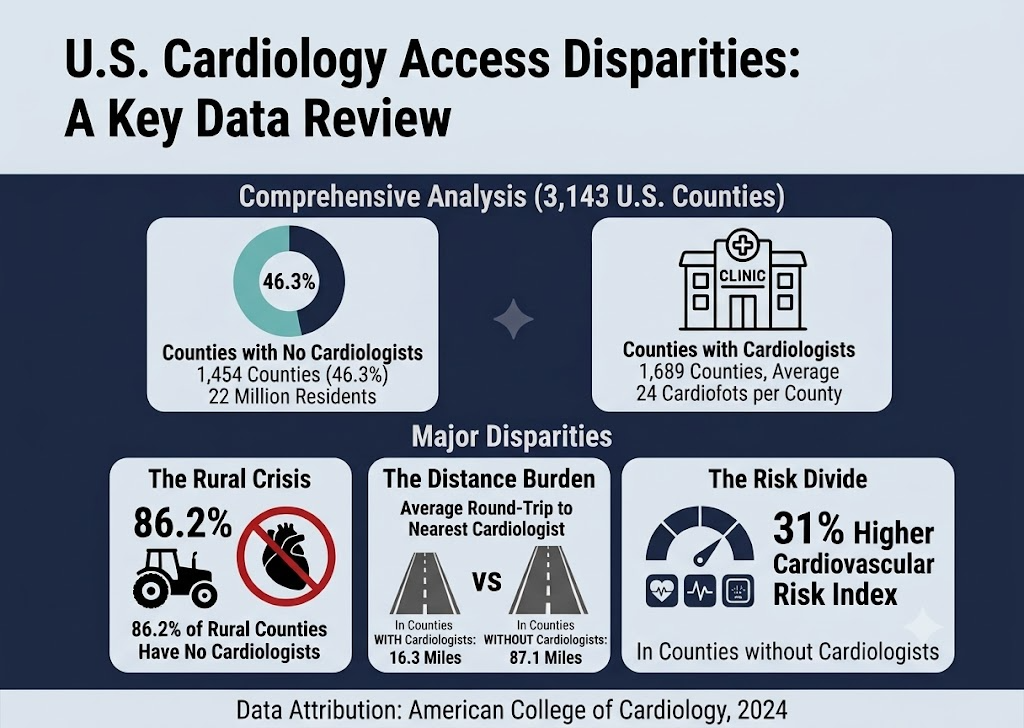
AI-generated infographic
Consider the numbers: 86.2% of rural counties do not have a single practicing cardiologist, forcing patients in these areas to travel an average of 87.1 miles just for a specialist appointment. Furthermore, local clinics are frequently under-equipped with advanced medical technologies. This scarcity pushes patients to seek care farther away in urban centers, which inadvertently starves local facilities of the patient volume and revenue they need to survive. It is a vicious economic cycle: low patient volume makes it difficult for rural facilities to stay afloat, causing more closures and widening the care gap even further.
The Distance Tax and Innovative Solutions
Because of the steep financial and physical barriers inherent to rural healthcare, management strategies must adapt to these challenges rather than fight against them. While preventative care is vital for any population, it requires an entirely different level of emphasis in rural communities due to these structural deficiencies. Rural populations often exhibit a higher prevalence of cardiovascular ailments, a reality driven by limited lifestyle options and exacerbated by geographic isolation.
To counter this, we need aggressive, coordinated outreach that bridges the public, private, and non-profit sectors. Robust community engagement can champion necessary lifestyle changes, provide local support systems, and serve as a vital mechanism for early CVD detection—allowing local clinics to treat manageable conditions directly before they escalate.
Prioritizing the reduction of this “distance tax” for life-saving treatments and medications is paramount. Public health authorities must ensure that isolated populations have at least periodic access to advanced interventions. This can be achieved through initiatives like traveling specialist networks and mobile medical clinics equipped with telehealth capabilities.
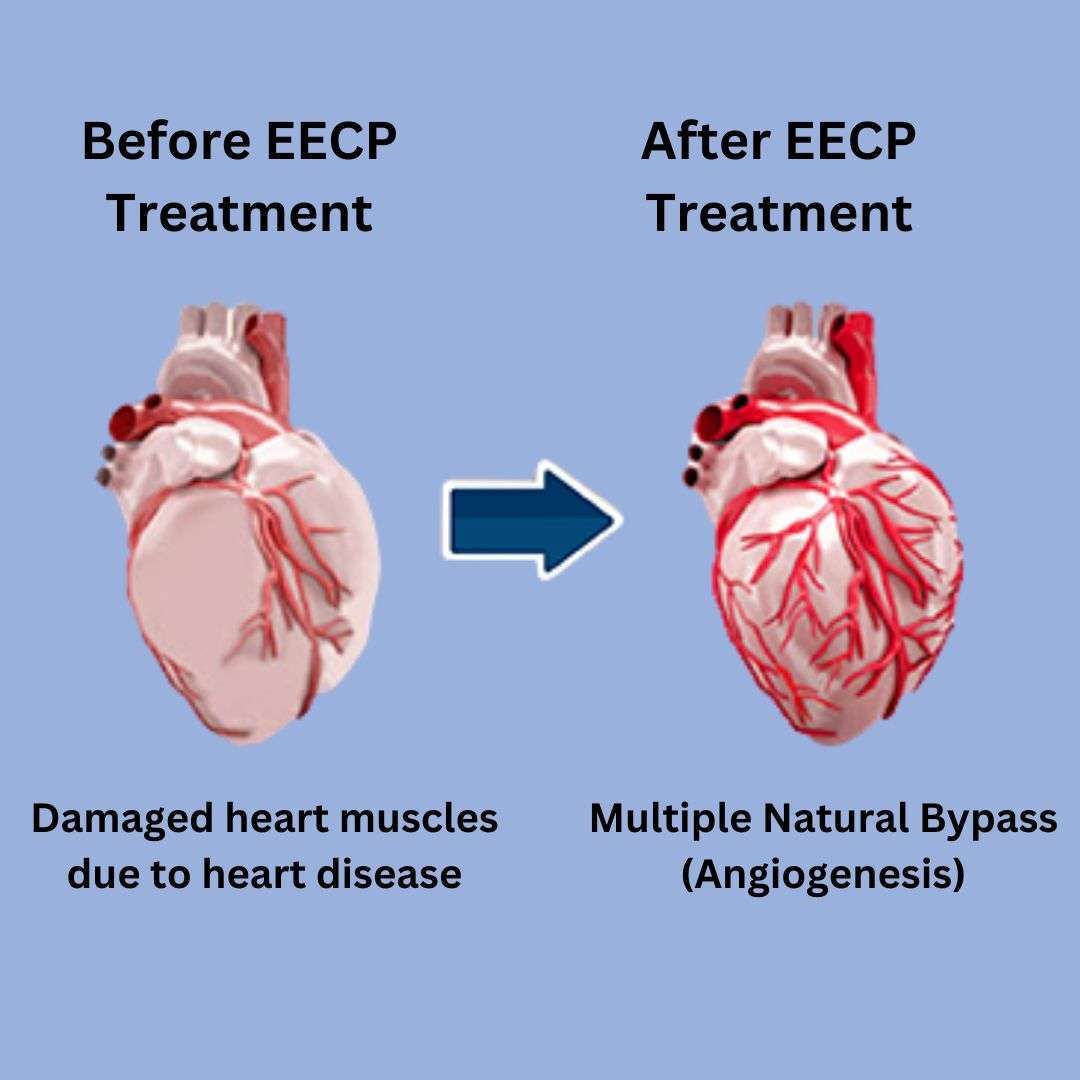
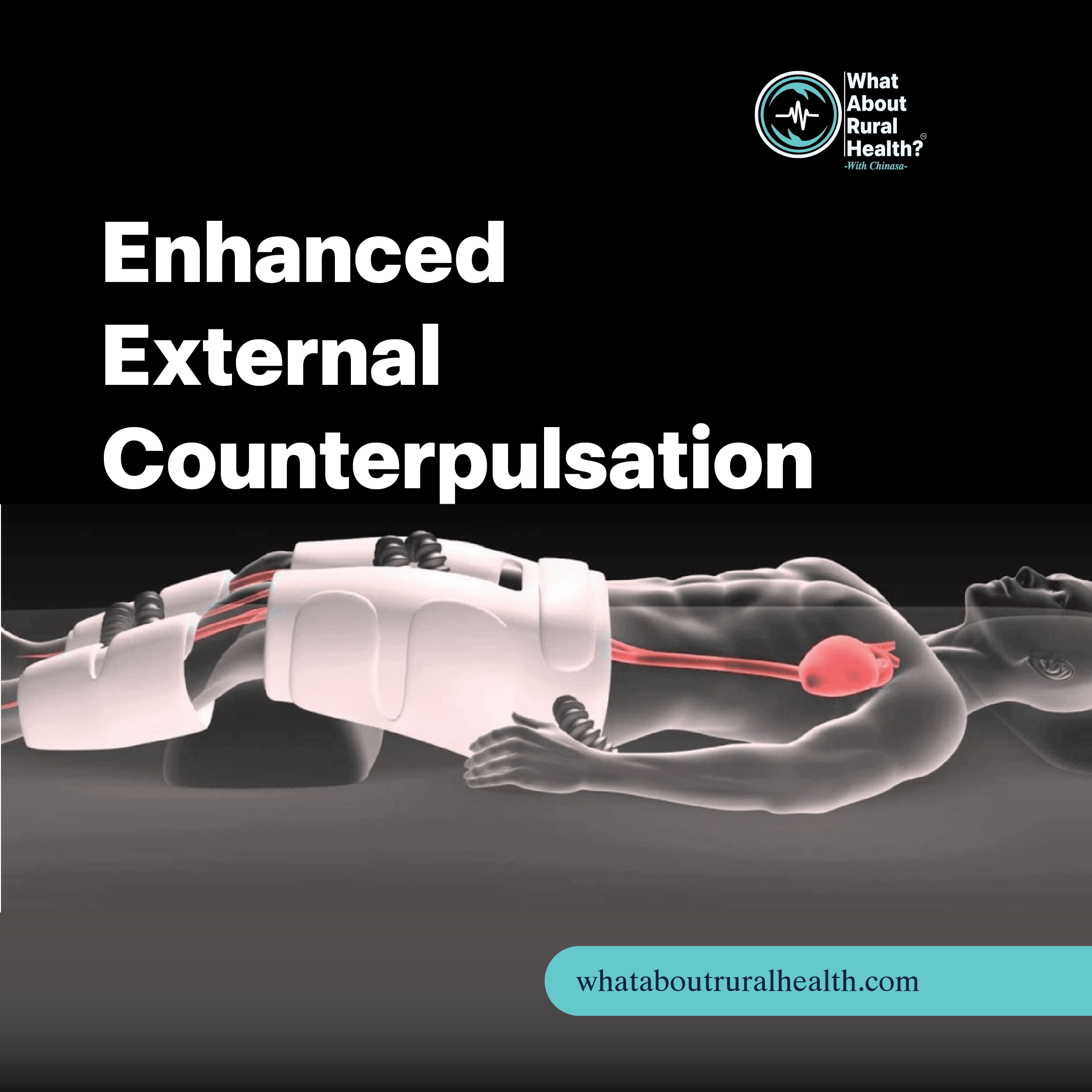
Furthermore, integrating evidence-based, non-invasive therapies like Enhanced External Counterpulsation (EECP) into these mobile or regional clinics can change the game. For suitable candidates, EECP can significantly reduce a patient’s reliance on high-demand urban hospitals for invasive surgical interventions, bringing the treatment directly to the community.
Listen to our full discussion on the clinical impact of EECP on the What About Rural Health? Podcast.
Health Promotion and Active Monitoring
Local healthcare workers are the frontline defense against the rise of rural cardiovascular disease, yet they are consistently forced to do more with less. Rural clinics are chronically understaffed, and distance remains a deadly variable in acute emergencies; in many remote areas, emergency medical services (EMS) face travel times of close to an hour just to respond to a heart attack.
Because emergency response times are structurally limited, proactive early intervention and rigorous patient monitoring are non-negotiable. Healthcare workers must be empowered to ensure that lifestyle modifications, dietary adjustments, and medicinal regimens are strictly followed before a crisis occurs.
Digital health monitoring and asynchronous reporting tools designed specifically for low-bandwidth connections are crucial here. These light-bandwidth technologies allow HCWs to track patient metrics remotely and intervene faster if the system flags data that falls outside of target therapeutic zones.
Alongside digital tracking, targeted patient education must be amplified, particularly among highly vulnerable groups. Except in congenital cases, cardiovascular disease is largely a multifactorial condition driven by long-term lifestyle factors. Because healthcare workers are deeply embedded and highly trusted figures within rural communities, they represent the an effective vector for delivering health education, promoting risk-reduction strategies, and halting the development of chronic CVD at the root.
Conclusion
Containing the rural cardiovascular disease crisis requires shifting from a system that demands patients travel for care to one that projects care outward into the community. The data makes it clear that relying on traditional, centralized urban hospital models inherently penalizes rural populations through a deadly “distance tax.” By restructuring care delivery around mobile clinics, leveraging low-bandwidth remote monitoring tools, and utilizing non-invasive local therapies, public health initiatives can meet rural patients where they are. Closing the widening mortality gap is not merely a clinical challenge; it is a matter of logistical equity, demanding that geographic isolation no longer dictates a patient’s life expectancy.
References
- American College of Cardiology, Almost Half of US Counties Have No Cardiologists Despite Higher Prevalence of CV Risk Factors, Mortality.
- Tori Rodriguez, Expert Roundtable: Addressing the Rural Cardiology Shortage.
- AHA, Call to Action: Rural Health.
- Thomas S Gruca et al, Providing Cardiology Care in Rural Areas Through Visiting Consultant Clinics.
- Randy W Braith et al, Enhanced External Counterpulsation for Ischemic Heart Disease: A Look Behind the Curtain.
- CDC, Preventing Chronic Diseases and Promoting Health in Rural Communities.
Also see:
- EECP Resource Hub
- Have You Heard of EECP?
- What Happens During an EECP Treatment Session?
- EECP: The therapy that could save your life with Jack Clifford (Podcast)
- When the Healthcare System Fails: Lessons from Dr. Peter Kowey
Lutfi Hakim Ariff is a social impact strategist with a background spanning both the public and private sectors. Lutfi holds a Master of Public Policy (MPP) from the University of Chicago.
Chinasa U. Imo is a development and global health policy strategist, researcher, and social impact leader. She is a PhD scholar at the University of Chicago, where her work focuses on public health governance, emergency coordination, and rural health equity.