About this episode
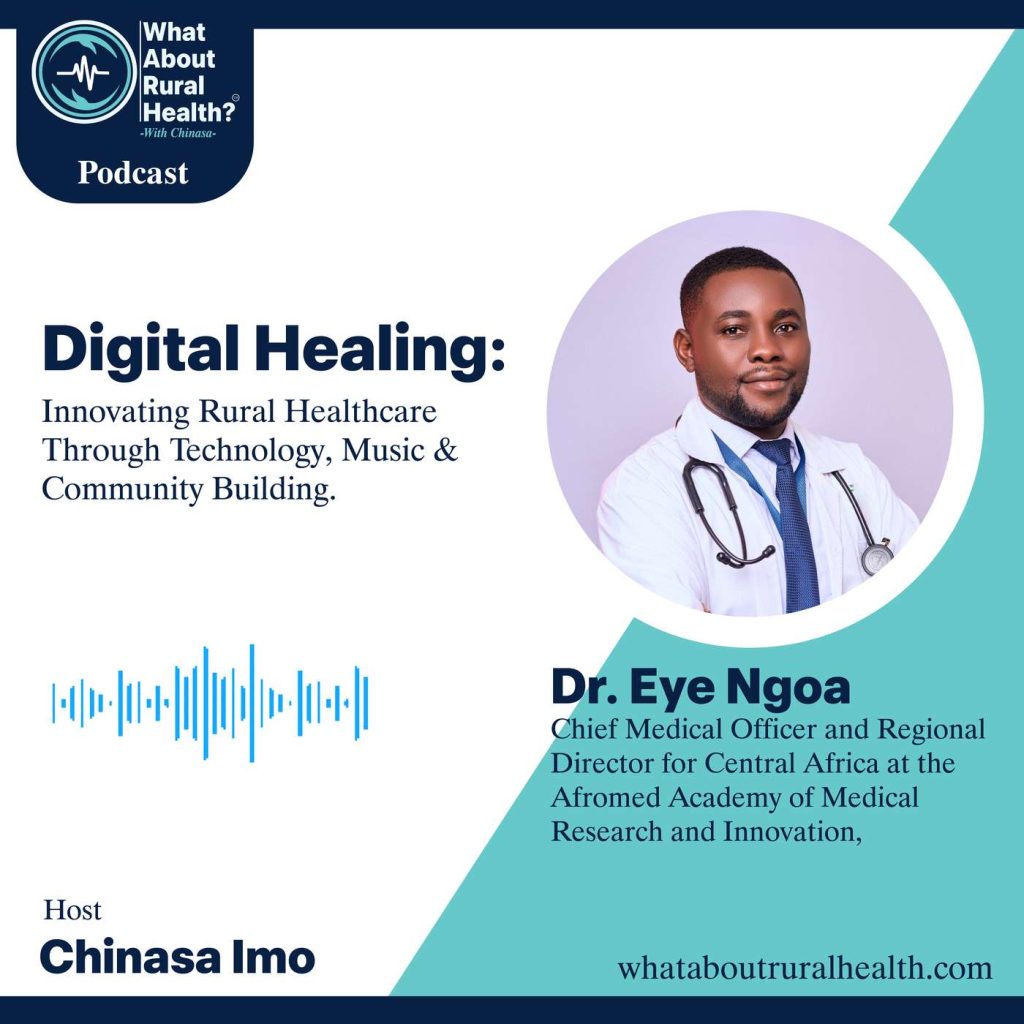
Digital health innovation in rural areas works best when technology supports human relationships, local culture, and practical community needs. In this episode of What About Rural Health?™, Dr. Eye Ngoa joins host Chinasa Imo to explore how low-cost digital tools, music, storytelling, and community-led design can make rural healthcare more accessible, compassionate, and responsive.
The conversation moves beyond the idea that innovation must be expensive or highly technical. Dr. Ngoa explains how creative, people-focused approaches can support patients experiencing trauma, depression, and the pressures associated with oncology care. He also discusses the infrastructure barriers that shape rural health delivery, including unreliable electricity, limited internet connectivity, weak policy support, and unequal access to trustworthy health information.
This episode offers a grounded view of rural healthcare innovation: technology is valuable when it solves a real problem, respects privacy, reflects local realities, and strengthens the connection between patients, communities, and healthcare professionals.
What does digital health innovation mean for rural communities?
For rural communities, digital health innovation can include telehealth, mobile communication, social media, remote support, digital education, and simple tools that help people reach reliable care. The goal is not technology for its own sake. The goal is to reduce distance, improve communication, connect patients with services, and help clinicians and communities make informed decisions.
Dr. Ngoa emphasizes that useful innovation begins with listening. A solution that ignores electricity, connectivity, language, culture, cost, or local trust may widen disparities instead of closing them. Human-centred design asks what people need, what resources already exist, and how a new tool can fit safely into everyday life.
How can music support healing and wellbeing?
Music can create connection, expression, and emotional support when clinical language alone is not enough. In this conversation, Dr. Ngoa describes how his grandmother inspired his understanding of music as a source of healing. He reflects on its potential role in supporting people facing trauma, depression, and cancer care.
The discussion does not present music as a replacement for medical treatment. Instead, it shows how culturally meaningful, creative approaches can complement care and help healthcare feel more holistic and humane. For rural health leaders, this is a reminder that community assets, traditions, and lived experience can be part of innovation.
Why do infrastructure and policy still matter?
Digital tools depend on systems that many rural communities cannot take for granted. Electricity, affordable internet, devices, digital literacy, trained health workers, privacy safeguards, and supportive policy all affect whether an intervention succeeds. Without these foundations, even a promising platform may remain inaccessible.
The episode connects innovation to equity. Closing rural health gaps requires investment in basic infrastructure alongside creative services. It also requires policymakers, technology developers, clinicians, and community members to design solutions together rather than importing systems that do not match local conditions.
How can social media strengthen rural health communication?
Social media can amplify rural health stories, connect people with information, and build communities around shared challenges. It can also spread inaccurate claims or expose private information. Dr. Ngoa highlights the importance of fact-checking, patient privacy, ethical communication, and culturally sensitive storytelling.
For health professionals and advocates, responsible digital communication means explaining evidence clearly, acknowledging uncertainty, protecting patients, and centering community voices. When used carefully, online platforms can help rural health concerns reach decision-makers and wider audiences.
About the guest
Dr. Eye Ngoa is a physician and rural health advocate whose work brings together healthcare, digital communication, music, and community engagement. In this episode, he shares practical lessons on human-centred innovation, ethical health storytelling, and creative approaches to patient wellbeing.
Who should listen?
- Rural healthcare professionals and health system leaders
- Public health practitioners and community health workers
- Digital health, telehealth, and health technology teams
- Policymakers and funders working on healthcare access
- Researchers and students interested in health equity
- Musicians, storytellers, and advocates exploring the role of culture in healing
Frequently asked questions
What is digital health innovation in rural areas?
It is the use of appropriate digital tools and communication systems to improve access, coordination, information, and care for people in rural communities. Effective solutions are affordable, accessible, secure, and designed around local needs.
Can technology alone solve rural healthcare disparities?
No. Technology can support access, but it also depends on infrastructure, workforce capacity, policy, trust, affordability, and community participation. Sustainable progress combines digital tools with investment in the broader health system.
How can music contribute to healthcare?
Music can support expression, connection, coping, and emotional wellbeing as part of a broader, person-centred approach. It should complement appropriate clinical care rather than replace medical treatment.
What makes digital health communication ethical?
Ethical communication protects privacy, verifies information, avoids misleading claims, respects culture, and includes the voices of the communities being discussed.
Key topics and search terms
Digital health innovation in rural areas, rural healthcare technology, telehealth access, rural health equity, music and healing, community health innovation, digital health ethics, patient privacy, health communication, rural infrastructure, culturally responsive care, and community-centred healthcare.
What are the main takeaways?
Digital health innovation in rural areas succeeds when it is practical, inclusive, and built with communities. The strongest solutions combine appropriate technology with reliable infrastructure, ethical communication, cultural knowledge, and trusted relationships.
For leaders and funders, the central lesson is clear: digital health innovation in rural areas should be measured by whether it improves access and strengthens care, not simply by how advanced the technology appears.
Resources
- Explore more episodes of What About Rural Health?™
- Learn more about host Chinasa Imo
- Share your rural health story: info@whataboutruralhealth.com
About What About Rural Health?™
What About Rural Health?™ is a global platform for rural health equity, using conversations, digital storytelling, advocacy, and collaboration to bring rural healthcare challenges and solutions into public and policy discussions.
Work with What About Rural Health?™
For partnerships, speaking, sponsorship, research collaboration, or story submissions, email info@whataboutruralhealth.com. You can also support the work of What About Rural Health?™.