What does sustainable rural health financing look like in practice?
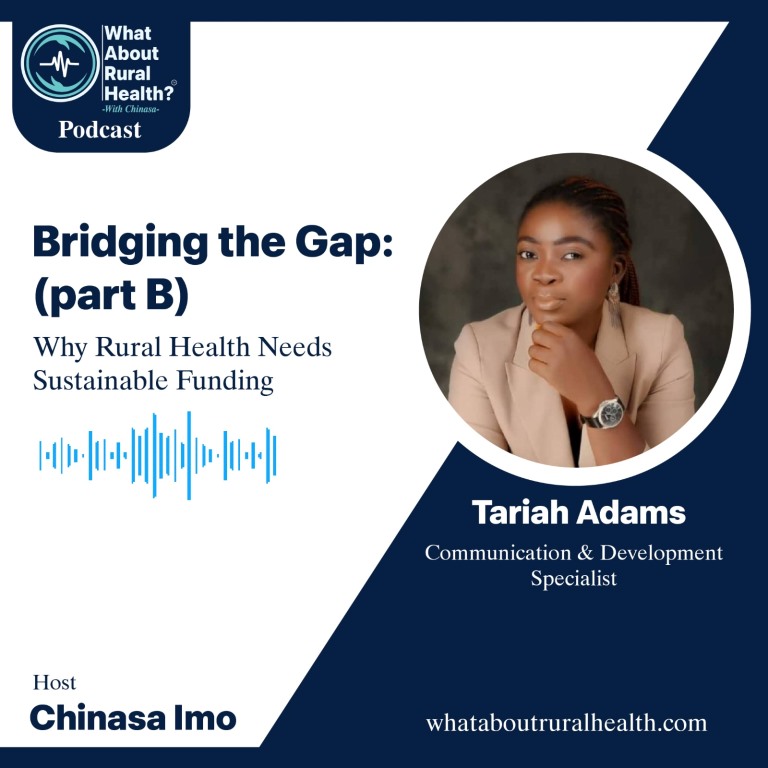
In Part B of Bridging the Gap, we move from diagnosis to solutions. From a community in Kebbi State, Nigeria — where women created a database of unvaccinated children and actively requested immunisation services – to broader structural questions about political will and local ownership, this episode explores what actually makes rural health interventions succeed.
We discuss why:
- Political will determines whether funding translates into real care
- Community trust is the foundation of effective health delivery
- Local ownership must be central to policy communication
- Partnership coordination strengthens rural health systems
- Emergency response systems often receive tools and resources that routine rural services never do
Why is performance high during outbreaks — but fragile in everyday healthcare?
We also challenge a critical assumption in rural health financing: policymakers must unlearn the belief that volunteers can indefinitely fill systemic gaps without sustainable funding. Listening to communities is not optional — it is essential.
Want to be a guest on What About Rural Health?™? Send Chinasa Imo a message on PodMatch, here: https://www.podmatch.com/hostdetailpreview/chinasaimo