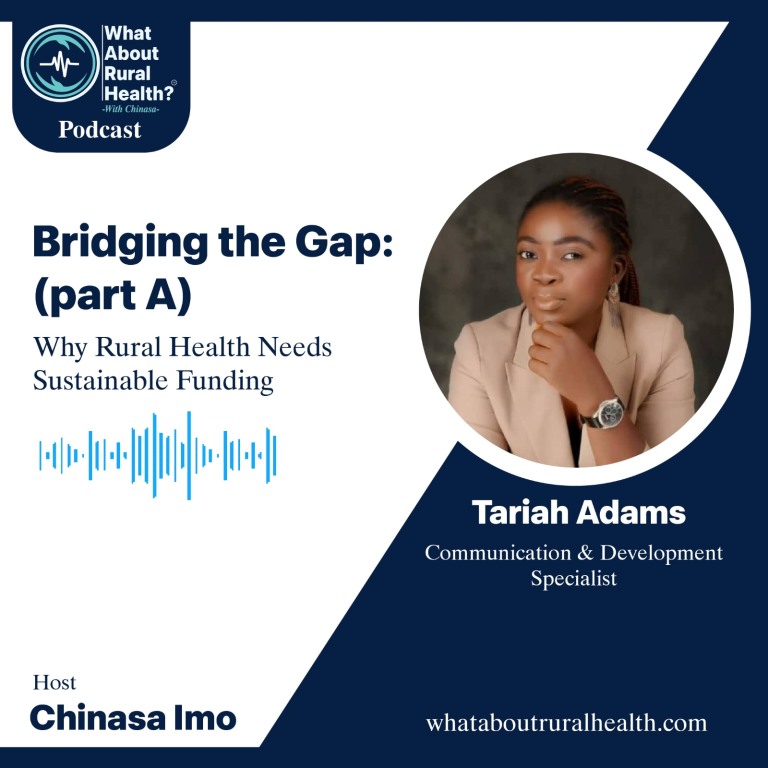
In this first episode of Rethinking Rural Health Financing, Bridging the Gap: Why Rural Health Needs Sustainable Funding, Chinasa speaks with Tariah Adams to unpack the structural reasons rural health financing continues to fail communities.
Tariah explains how most rural health funding is misaligned—designed to respond to crises rather than stabilise health systems. She highlights how project-based and politically driven funding models favour short-term, measurable outcomes, while rural health challenges are lived daily and require long-term investment.
She also points to a critical gap: many funding decisions are made by policymakers far removed from rural lived realities, resulting in budgets that exist on paper but fail in practice.
The conversation explores what underfunding really looks like on the ground—from hospitals that exist only in name, to self-medication, unfunded health worker postings, and communities left without care. Tariah emphasises that true success in rural health financing can only be measured by community feedback and involvement, and she calls on rural communities to innovate and take part in shaping solutions rather than waiting for change.
This episode sets the tone for a series that asks hard questions about power, priorities, and justice in rural health.
Want to be a guest on What About Rural Health?™? Send Chinasa Imo a message on PodMatch, here: https://www.podmatch.com/hostdetailpreview/chinasaimo