
By Nsikak Elijah — October 2025
Every October, the global health community gathers in Berlin for one of the most influential events in the field — the World Health Summit (WHS). But this year’s summit felt different. The tone was urgent, the stakes were higher, and the message was clear: the world’s health challenges are deeply intertwined with politics, peace, and equity — and Africa’s role in shaping that future is non-negotiable.
Here are 10 takeaways from the 2025 World Health Summit — and why they matter for Africa.
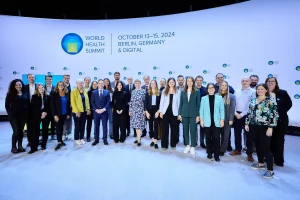
World Health Summit 2025
1. Germany Puts Its Money Where Its Mouth Is
The summit opened with a major announcement: Germany pledged €1 billion to the Global Fund to Fight AIDS, Tuberculosis and Malaria.
Despite “painful budget cuts,” German Minister Reem Alabali-Radovan said the country “will continue to be actively engaged in protecting people around the world from disease.” It’s a big signal that health funding — even in tight times — remains a global priority.
For Africa, where these diseases still account for a high disease burden, this isn’t just generosity — it’s continuity of life-saving support.
2. The Data Speaks: Youth Are Dying More, Not Less
The new Global Burden of Disease (GBD) 2023 Study, launched exclusively at WHS, brought a sobering revelation: while global mortality rates are declining overall, deaths among young people are rising.
According to Dr. Christopher Murray of the Institute for Health Metrics and Evaluation (IHME), this is a wake-up call to address inequities and risk factors like high BMI and blood sugar levels.
In Africa, where NCDs like diabetes and hypertension are climbing fast, this data underscores the need for stronger prevention programs and health education targeting the youth.
3. Reforming Global Health Financing Isn’t Optional
Panelists, including Winnie Byanyima, Executive Director of UNAIDS, called for an overhaul of the global health financing system.
“When people get sick, it’s a tragedy — but it’s also an economic burden,” she said, pushing for debt relief, fairer taxation, and international financial reform to support health systems.
For African nations trapped between limited domestic budgets and declining aid, this reform conversation could decide whether health programs thrive or stall.
4. Health Is a Political Choice
The theme of Day 2 — Taking Responsibility for Health in a Fragmenting World — captured a powerful idea: health is not just a technical issue, it’s a political one.
German Health Minister Nina Warken and EU Commissioner Hadja Lahbib emphasized that choosing to invest in health is choosing to build peace and stability.
As Dr. Tedros Adhanom Ghebreyesus, WHO Director-General, put it: “We call on all countries to focus on what matters most — the people we serve.”
For African leaders, this is a reminder that political will is as important as medical expertise.
5. Emotional Health Is Global Health
One of the most human-centered moments came from Gallup’s State of the World’s Emotional Health Report, revealing that 39% of adults worldwide felt worried and 37% felt stressed the previous day — more than a decade ago.
Gallup CEO Jon Clifton put it bluntly: “When peace fails, emotional wellbeing follows.”
In less peaceful societies — many of which are in conflict-affected African regions — mental health investments aren’t a luxury; they’re a necessity.
6. Pandemic Preparedness: Still a Test We Can’t Fail
The Global Preparedness Monitoring Board (GPMB) 2025 report warned that the world remains dangerously underprepared for the next pandemic.
Former Croatian President Kolinda Grabar-Kitarović urged nations to build preparedness “anchored in strong, well-financed primary health care.”
This hits close to home for Africa, where primary health centers are often the first — and sometimes only — line of defense in an outbreak.
7. Peace and Health Are Two Sides of the Same Coin
By Day 3, the conversation shifted toward the link between conflict and health.
Ukraine’s Deputy Health Minister Edem Adamanov described resilience as “not just endurance — but growth.” Sierra Leone’s Health Minister Austin Demby echoed this: “Investing in health is investing in peace.”
From Sudan to the Sahel, the lesson for Africa is crystal clear — health systems can’t survive without peace, and peace cannot last without health.
8. Women’s Health Is Global Wealth
A standout theme this year was investing in women’s health.
According to Diene Keita, Executive Director of UNFPA, women’s health remains “chronically underfunded and underprioritized.” Less than 1% of global R&D targets female-specific conditions beyond cancer — yet a $300 million investment could yield $13 billion in returns.
For African nations with high maternal mortality rates, this data reinforces what WARH has always stood for: gender equity is not charity — it’s smart economics.
9. Collaboration Must Be Local and Global
Across all sessions, one message kept returning — no country can go it alone.
Prof. Lukoye Atwoli, Dean of Aga Khan University’s Medical College in East Africa, announced that the 2026 WHS Regional Meeting will be held in Nairobi, Kenya, ensuring that Africa’s voice is central to the next phase of the global health agenda.
This marks a pivotal opportunity for African researchers, policymakers, and civil society to influence the next decade of health priorities.
10. A Call for a New Global Health Architecture
Wrapping up the summit, Carsten Schicker, WHS CEO, said: “This must be the starting point for a more inclusive, resilient, and cooperative global health architecture — one that truly serves all people, everywhere.”
For Africa, that means seizing this moment — not as spectators, but as shapers of a global system that reflects local realities, from community health workers to national policy.
In the End…
The 2025 World Health Summit was a mirror — reflecting both progress and persisting gaps. It showed that while global health is everyone’s business, the future depends on how boldly Africa positions itself in the conversation.
Because in truth, as WARH continues to remind the world: Health equity is not given — it’s built, one rural community at a time.
Read More:
World Health Summit Day 1 Press Release
World Health Summit Day 2 Press Release
World Health Summit Day 3 Press Release
Highlights from the World Health Summit 2025
Also Read: The UNGA’s 2025 Bold Resolve on NCDs and Mental Health