ABOUT THIS EPISODE
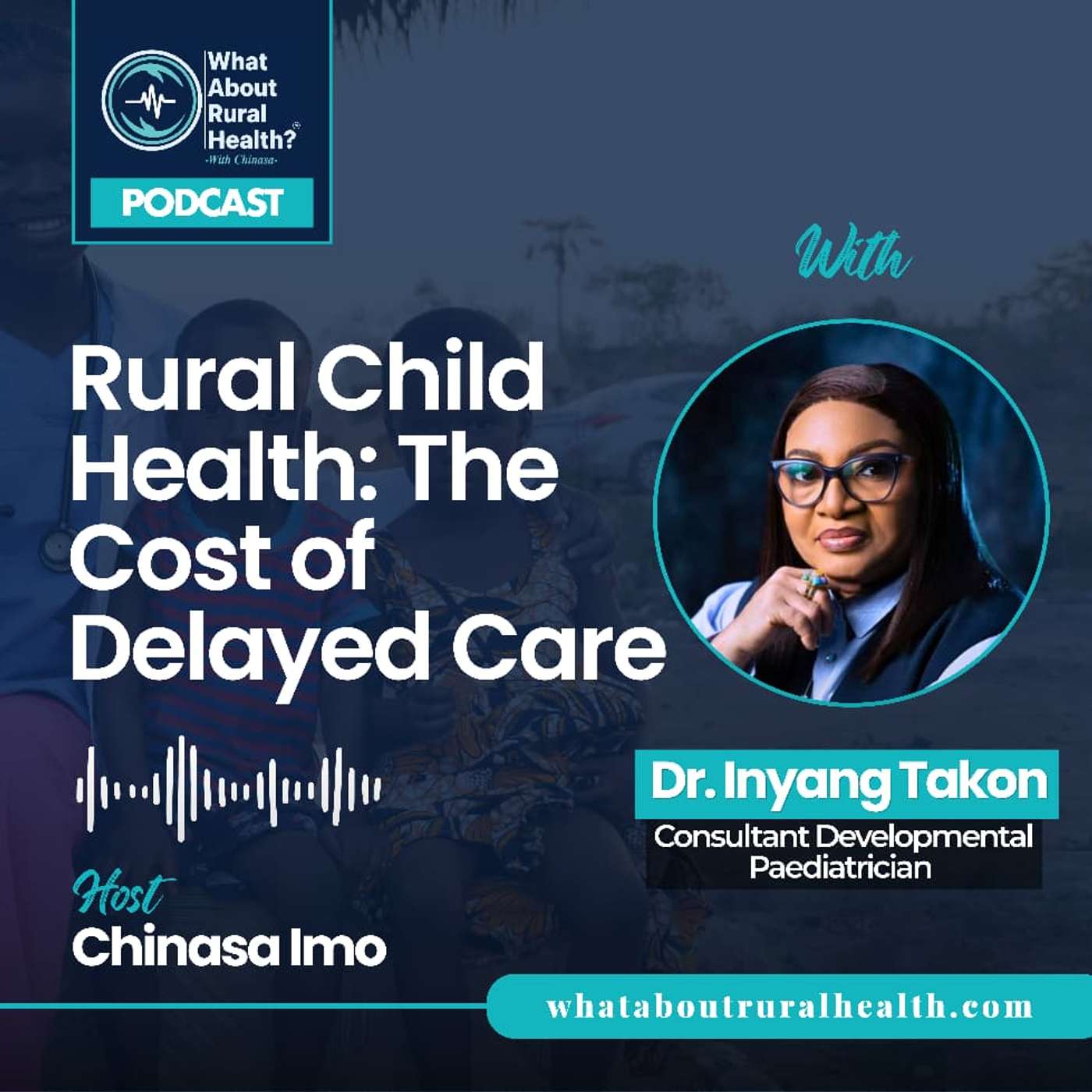
What happens when a rural child has a seizure, developmental delay, autism or ADHD, but appropriate care is hours away? Delayed diagnosis is not only a clinical problem. It can expose children to preventable complications, harmful emergency practices and missed opportunities for early support.
In Part 1, Chinasa U. Imo speaks with Dr. Inyang Takon about rural child health, pediatric healthcare access and the cost of delayed care. They examine what families face before reaching a hospital, why wealth cannot purchase services that do not exist locally, and how trusted community providers, paid frontline workers, developmental monitoring and mobile information can bring appropriate support closer to children.
ABOUT THE GUEST
Dr. Inyang Takon is a consultant community and neurodevelopmental paediatrician with more than 30 years of experience across Nigeria and the United Kingdom. Her clinical interests include epilepsy, ADHD, autism, developmental delay and neurodisability. She leads specialist services at East and North Hertfordshire Teaching NHS Trust and is a co-founder of School Doctor.
IN THIS CONVERSATION
• Why delayed seizure care can cause preventable harm for rural children
• How distance, limited emergency services and specialist shortages shape pediatric healthcare access
• Recognizing developmental delay, autism and ADHD when specialists are unavailable
• What parents, teachers and community health workers can safely identify and support
• Why trusted local providers should be trained rather than excluded
• The need to pay community health workers instead of relying on unpaid labor
• Using immunization visits and mobile technology for developmental monitoring
• Designing child-health systems with communities
(00:00) – Why delayed care costs rural children
(01:30) – Dr. Takon’s path into neurodevelopmental pediatrics
(08:53) – Rural healthcare access and the limits of wealth
(16:28) – Seizures, first aid and harmful emergency practices
(24:25) – What communities can safely provide
(29:32) – Training trusted local care providers
(35:01) – Paying community health workers
(38:59) – What early intervention should look like
(42:47) – Using immunization visits for developmental monitoring
(45:10) – Mobile technology and local-language guidance
(49:13) – Community knowledge, research and co-design
(51:50) – Diaspora expertise and locally led systems
(53:20) – Closing reflections
RESOURCES FROM THIS EPISODE
Dr. Inyang Takon: https://www.drtakon.com/
East and North Hertfordshire Teaching NHS Trust profile: https://www.enherts-tr.nhs.uk/consultants/inyang-takon/
School Doctor: https://school-doctor.com/
WATCH THE EPISODE
Click here to watch a video of this episode.
READ THE TRANSCRIPT
Click here to view the episode transcript.
ABOUT WHAT ABOUT RURAL HEALTH?™
What About Rural Health?™ podcast explores how healthcare is accessed, financed, governed, and delivered in rural and underserved communities. Hosted by Chinasa U. Imo, a global health policy strategist, researcher, and rural health advocate, the podcast brings together researchers, policymakers, health professionals, community leaders, innovators, and people working within health systems to examine the decisions and structures shaping rural healthcare around the world.
Visit: https://whataboutruralhealth.com/
WORK WITH WHAT ABOUT RURAL HEALTH?™
For guest, partnership, sponsorship, media, and collaboration inquiries:
info@whataboutruralhealth.com
SUPPORT WHAT ABOUT RURAL HEALTH?™
FOLLOW WHAT ABOUT RURAL HEALTH?™
Instagram: https://www.instagram.com/whataboutruralhealth
LinkedIn: https://www.linkedin.com/company/what-about-rural-health%E2%84%A2
YouTube: https://www.youtube.com/@WhatAboutRuralHealth
Facebook: https://facebook.com/whataboutruralhealth
TikTok: https://www.tiktok.com/@whataboutruralhealth1
X: https://x.com/Ruralist_Health